Theater of Delphi | The cultural heart of ancient Greece

As part of the Delphi archaeological site, the ancient theater was a center for artistic and cultural expression. It hosted dramatic performances, poetry recitals, and music during festivals, including the Pythian Games. The theater played a vital role in religious and cultural life, as theater was an essential part of ancient Greek worship. Today, it stands as one of the best-preserved ancient Greek theaters, offering visitors a glimpse into the past.

How to access:

Access to the Theater of Delphi is included with your Delphi tickets, granting entry to this iconic site along with the rest of the archaeological complex. Whether you choose an audio entry or a day tour, both options provide access to the theater as part of your visit to the entire archaeological site.

Quick facts

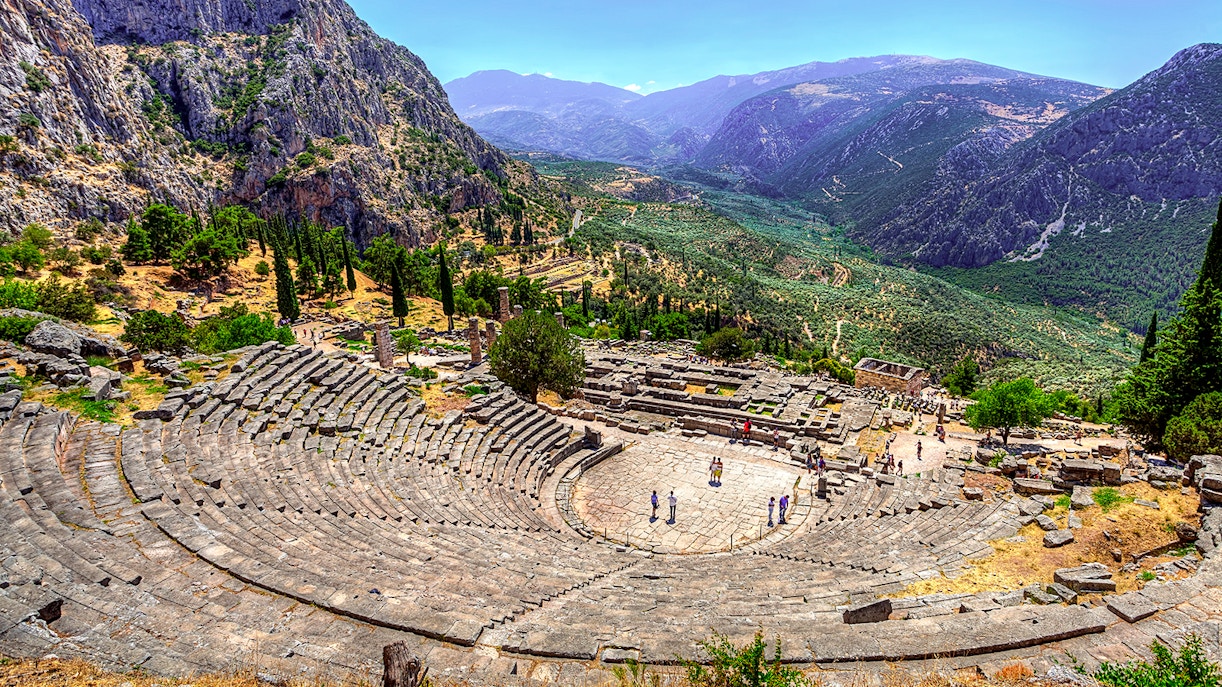
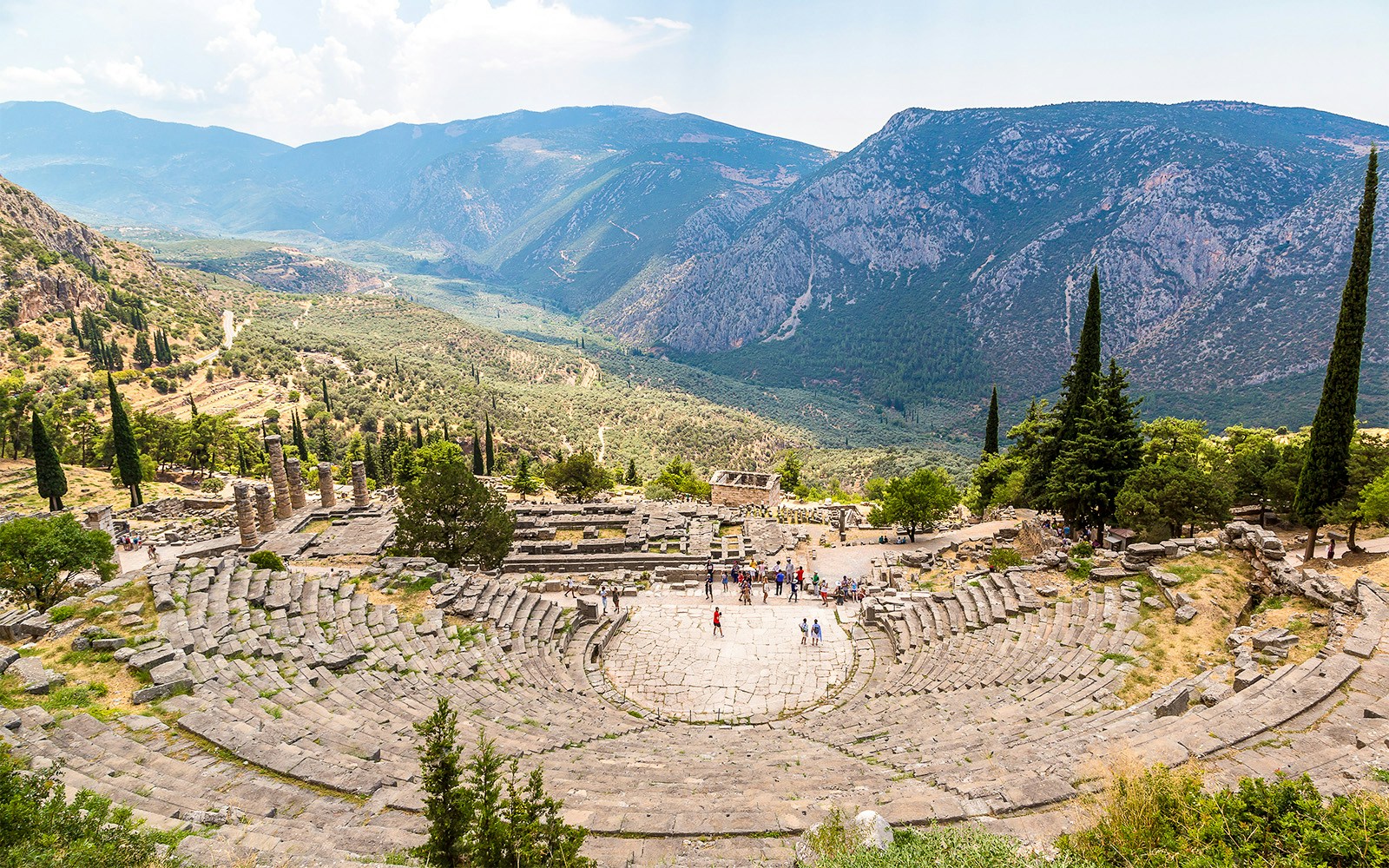
Ancient Theater in Delphi with mountainous landscape in the background.
  • Address: Delphi 330 54, Greece | Find on maps
  • Location: Part of the Delphi archaeological site, just above the Temple of Apollo
  • Date of construction: 4th century BCE
  • Function: Venue for theatrical performances and musical contests during the Pythian Games
  • Capacity: 5000 spectators

Highlights of the Delphi Theater

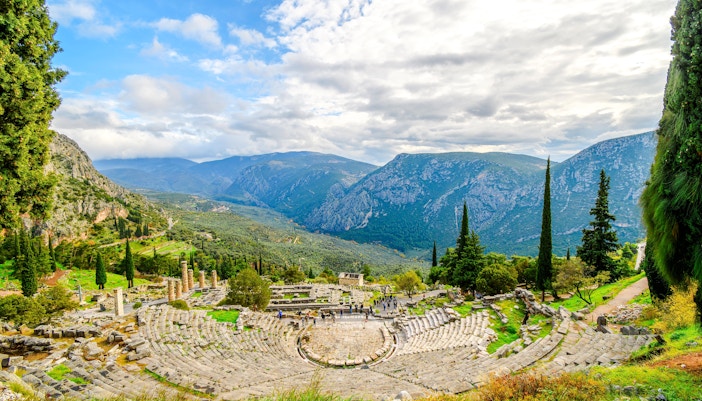
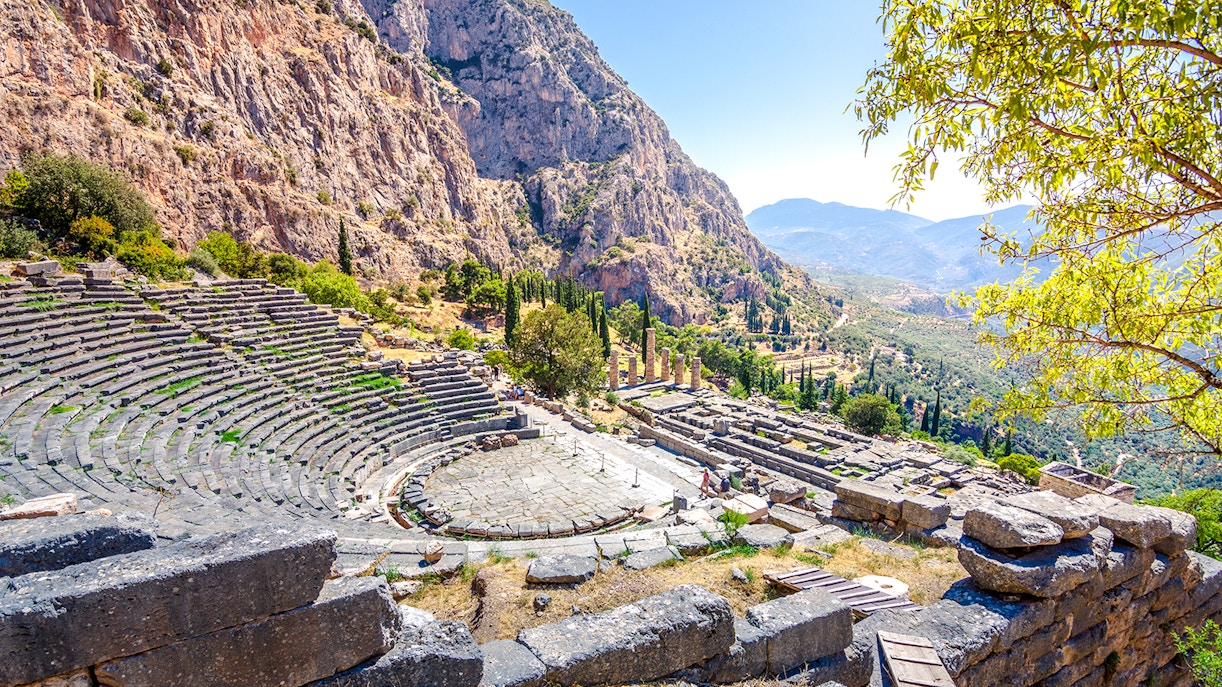
Theater of Delphi with mountainous backdrop in Greece.

Spectacular location

Built into the slope of Mount Parnassus, the theater offers stunning panoramic views of the surrounding valley and the Temple of Apollo. Its strategic position enhances the acoustics, making it an ideal setting for dramatic performances and musical events.

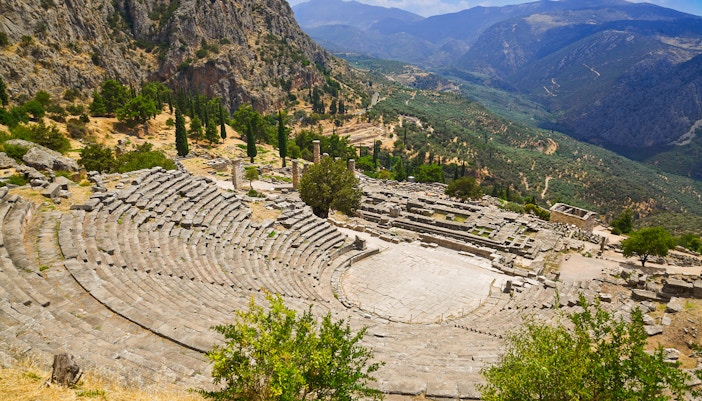
Ancient theatre ruins in Delphi, Greece, with mountainous landscape in the background.

Greek amphitheater design

The theater is a classic example of a Greek amphitheater, designed in a horseshoe shape. Its construction maximizes the use of the natural landscape, with a height difference of 15 meters between the top row of seats and the orchestra, creating an impressive visual experience for ancient audiences.

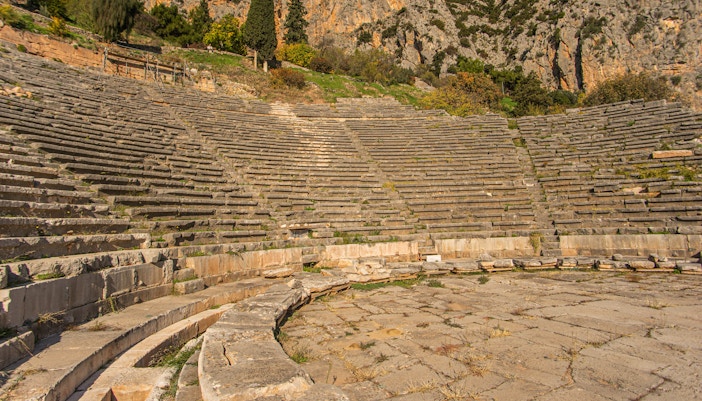
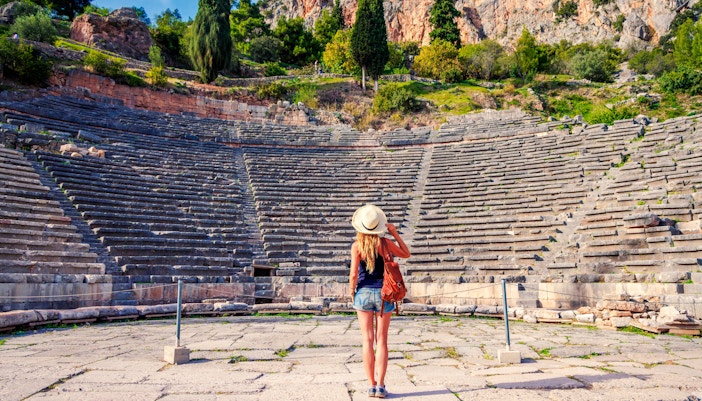
Theater of Delphi stone seating with mountainous backdrop in Greece.

Well-preserved seating (Cavea)

The theater's seating area, or cavea, is carved directly into the hillside and made from local Parnassus limestone. With 35 rows of seats, it was designed to accommodate thousands of spectators during the festivals and performances held here.

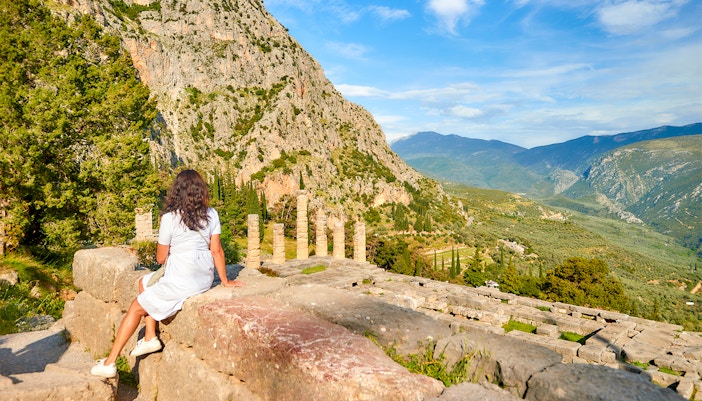
Woman sitting at Delphi archaeological site overlooking ancient ruins and mountains in Greece.

The Orchestra

The orchestra, where the chorus performed, is one of the standout features of the theater. Originally 14 meters in diameter, it was later expanded to 18 meters, showcasing the importance of music and dance in Greek theater. The orchestra is separated from the seating area by a corridor, preserving its acoustics.

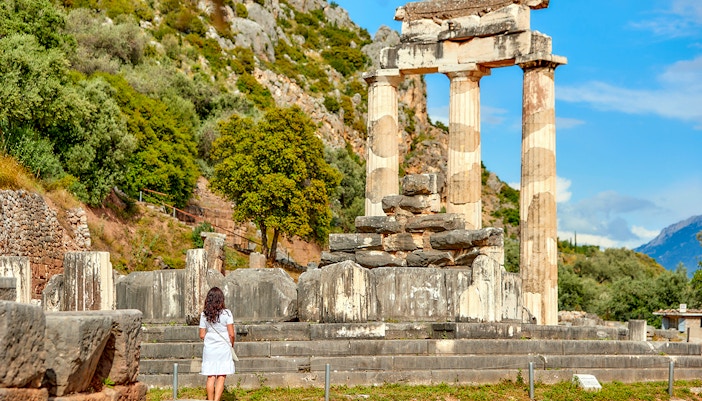
Woman sitting on ancient stone ruins at Delphi archaeological site, Greece, with mountain view.

Side entrances (Parodoi)

The parodoi, or side entrances, were used by actors and spectators alike. These entrances are especially significant for the manumission inscriptions carved into their walls, which document the freeing of slaves, offering a unique insight into social practices in ancient Greece.

Visitor exploring the ancient Theater of Delphi in Greece.

Stage foundations

While the stage itself has not survived, the foundations of the rectangular stage remain. Positioned directly opposite the orchestra, it is where actors performed in front of the audience, creating a direct connection between the performers and spectators.

A brief timeline of the Theater of Delphi

  • 4th century BCE: The theater is first constructed, likely replacing an earlier structure, possibly a treasury, to make space for it.
  • 160 BCE: Eumenes II of Pergamon finances major renovations and repairs to the theater.
  • 67 AD: Renovations are carried out before the visit of Roman Emperor Nero, including paving the orchestra floor and adding a stone parapet.
  • 2nd century AD: Herodes Atticus, a Roman senator, funds additional modifications to the theater and the nearby Ancient Stadium of Delphi.
  • 5th to 14th century AD: Following the decline of Ancient Greece, the theater is abandoned and largely forgotten, like the rest of the Delphi site.
  • 1438 AD: Cyriacus of Ancona, an Italian traveler, visits Delphi and notes the theater as only partly visible, with rocks and soil covering much of it.
  • 1895 AD: The French School of Archaeology begins modern excavations, clearing parts of the theater.
  • 1927 AD: Greek poet Angelos Sikelianos and his wife Eva Palmer organize the First Delphic Festival, marking the first play performed in the theater in 2000 years.

History of the Delphi archaeological site >

Architecture & layout

Ancient Theater of Delphi with stone seating and mountain backdrop in Greece.
  • The ancient theater of Delphi, built in the 4th century BCE, is the largest structure in the temenos of the Temple of Apollo.
  • Designed in a typical Greek amphitheater style, it has a horseshoe shape with a height exceeding its width due to the steep slope. The height difference between the top row of benches and the orchestra is 15 meters.
  • The cavea (seating) is carved into the hillside and made from local Parnassus limestone, with material from a previous structure reused in its construction.
  • The theater had 35 rows of benches divided into two sections: 28 rows in the lower section and 7 in the upper, with staircases for access.
  • Parodoi (side entrances) gave access to the stage and were carved with manumission inscriptions about the freeing of slaves.
  • The orchestra, originally 14 meters in diameter and later expanded to 18 meters, housed the chorus and is separated from the seats by a corridor.
  • The rectangular stage, opposite the orchestra, faces the seats, with only its foundations remaining today.

Frequently asked questions about the Theater of Delphi

What are the timings of the theater of Delphi?

The theater is part of the main Delphi archaeological site and follows the same working hours. From April 1 to August 31, the theater is open from 8am to 8pm. From September 1 to October 31, the timings reduce by 30 minutes every two weeks to accommodate the shorter daylight hours. From November 1 to March 31, the theater is open from 8:30am to 3pm.

How can I access the Delphi theater?

The theater is located above the Temple of Apollo. You can reach it by taking the walking path and climbing up. From the top of the theater, you can view the entire Delphi sanctuary on the hillside below.

Can I enter the theater?

Yes, the monument is open to public access and you can enter and walk around the theater.

Is the stadium accessible by wheelchair?

The uphill path leading to the theater is rough and steep, make it unsuitable for wheelchair users to navigate it.

More reads

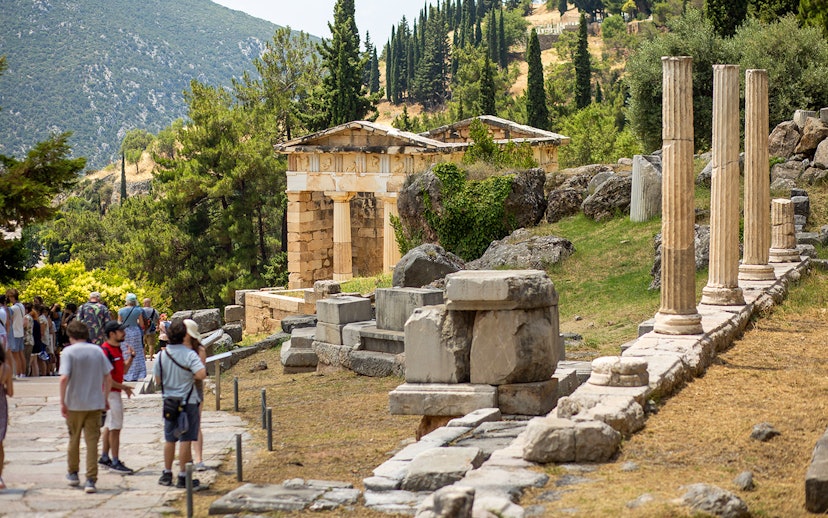
Guests exploring ancient ruins at Delphi, Greece.

Sanctuary of Athena Pronaia

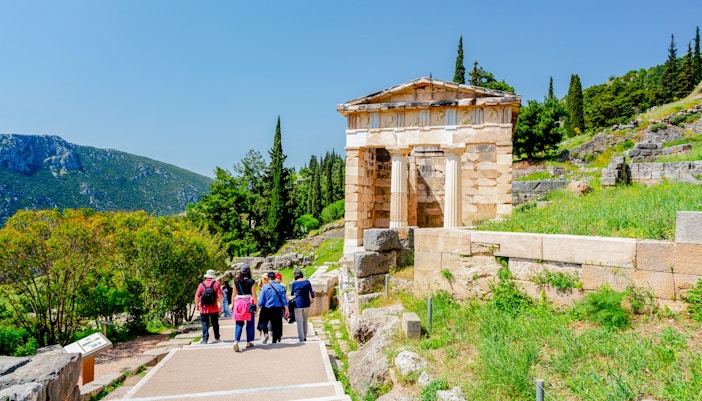
Tourists walking towards the Athenian Treasury at Delphi, Greece, surrounded by greenery.

The Athenian Treasury

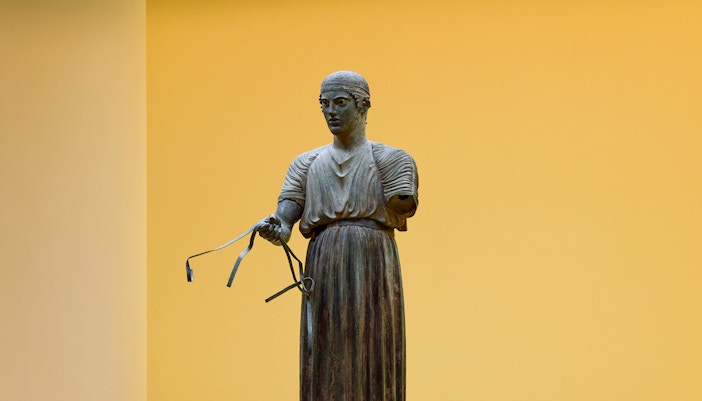
Sculpture of a charioteer holding reins inside Delphi Museum.

Delphi Archaeological Museum