- Address: Delphi 330 54, Greece | Find on maps
- Location: Next to the Delphi archaeological site on Mount Parnassus, Delphi
- Opened in: 1903
- Galleries: 14
- Highlights: The Charioteer of Delphi, the Sphinx of Naxos, the Kouroi of Delphi (Cleobis and Biton), Chryselephantine statues, the Dancers of Delphi, the Omphalos, the Statue of Antinous, the frieze of the Siphnian Treasury.
Delphi Archaeological Museum | Home to treasures from the Delphi sanctuary
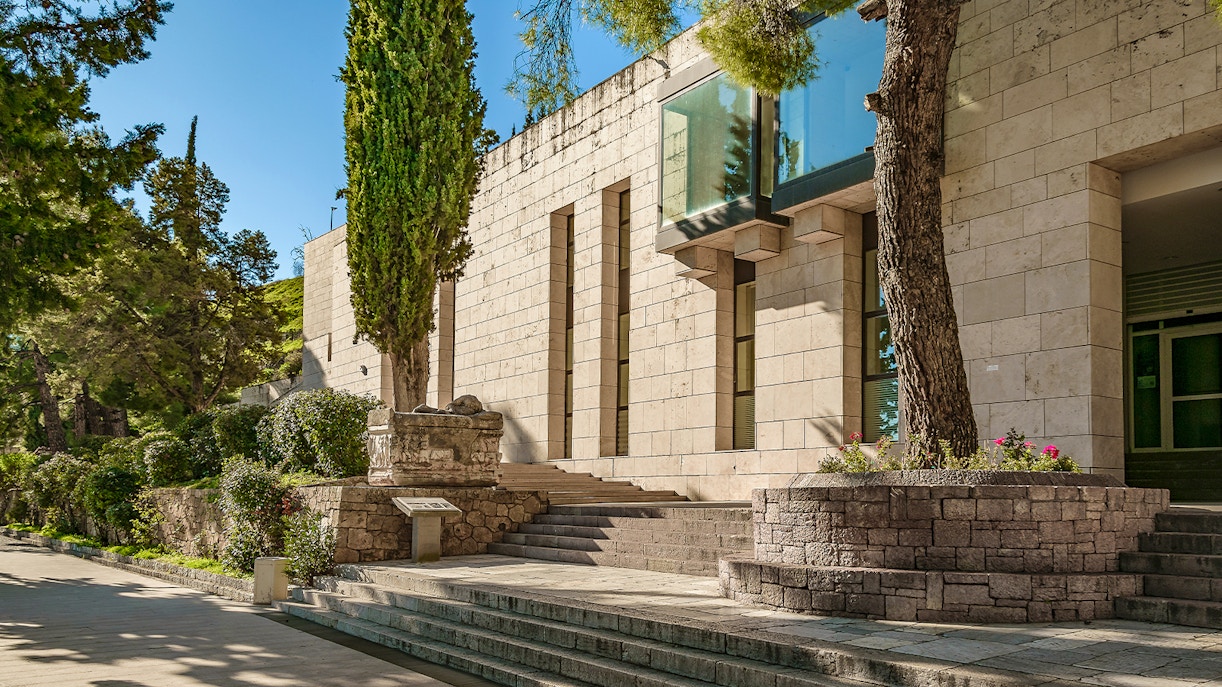
One of Greece’s most important and most visited museums, the Delphi Archaeological Museum houses the extraordinary antiquities excavated from the Delphi sanctuary. Its collection includes sculptures, parts of friezes from temples and treasuries, and votive offerings made to Apollo in ancient times. With 14 galleries, the museum is a treasure trove of ancient Greek archaeological finds.
How to access:
All entry tickets to the Delphi archaeological site include access to both the site and the Delphi Archaeological Museum, offering a full experience of ancient Greek history. Whether you choose a standard entry, full-day pass, or guided tour, you’ll have the chance to explore the iconic ruins and the museum’s fascinating collection of artifacts.
Quick facts
Why visit the Delphi Archaeological Museum
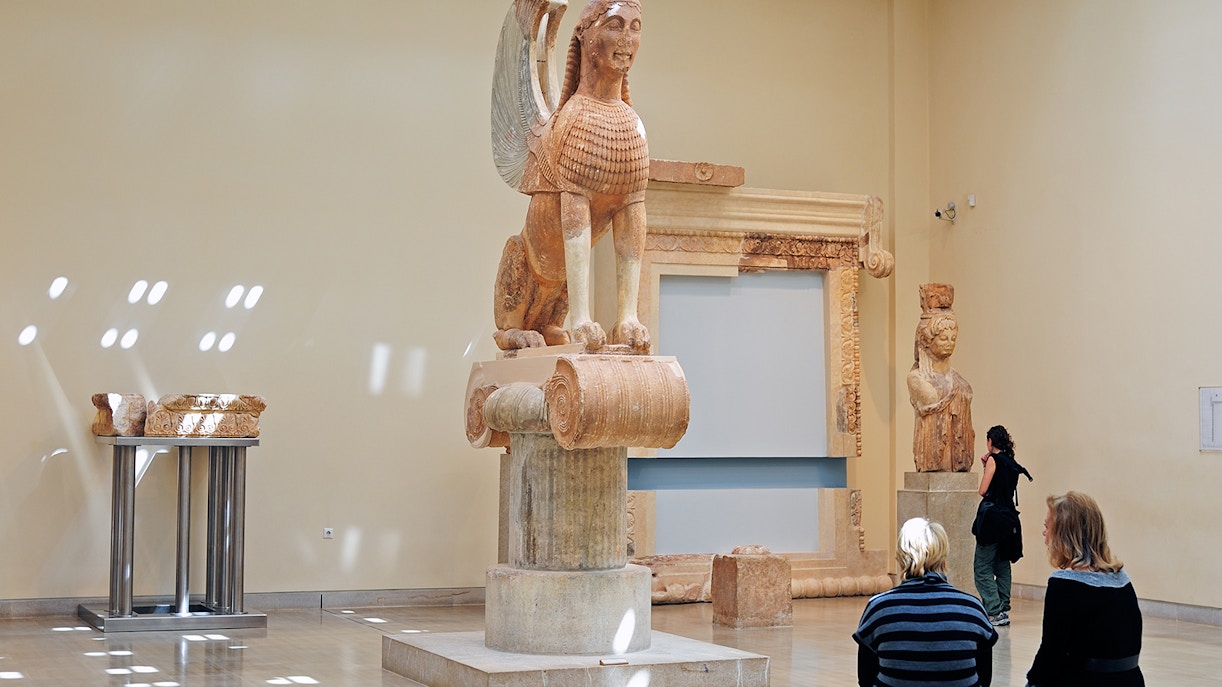
- Ancient treasures: The museum showcases a vast collection of artifacts spanning over 1000 years, including sculptures, statues, pottery, architectural fragments, and inscriptions from the Delphi archaeological site.
- Chryselephantine objects: Among the most prized exhibits are the rare gold and ivory statues of Apollo, Artemis, and Leto, which were recovered from the site and reflect the exceptional craftsmanship of ancient Greece.
- The Omphalos: The museum houses the original Omphalos stone, believed to have marked Delphi as the center of the Earth, symbolizing its ancient significance and historical prominence.
- Sculptural masterpieces: Visitors can admire some of the finest examples of Greek sculpture, including iconic works like the Charioteer of Delphi, the Kouroi twins, the Sphinx of Naxos, the statue of Antinous, and the Dancers of Delphi.
Must-see artifacts at the Delphi Museum
1/8
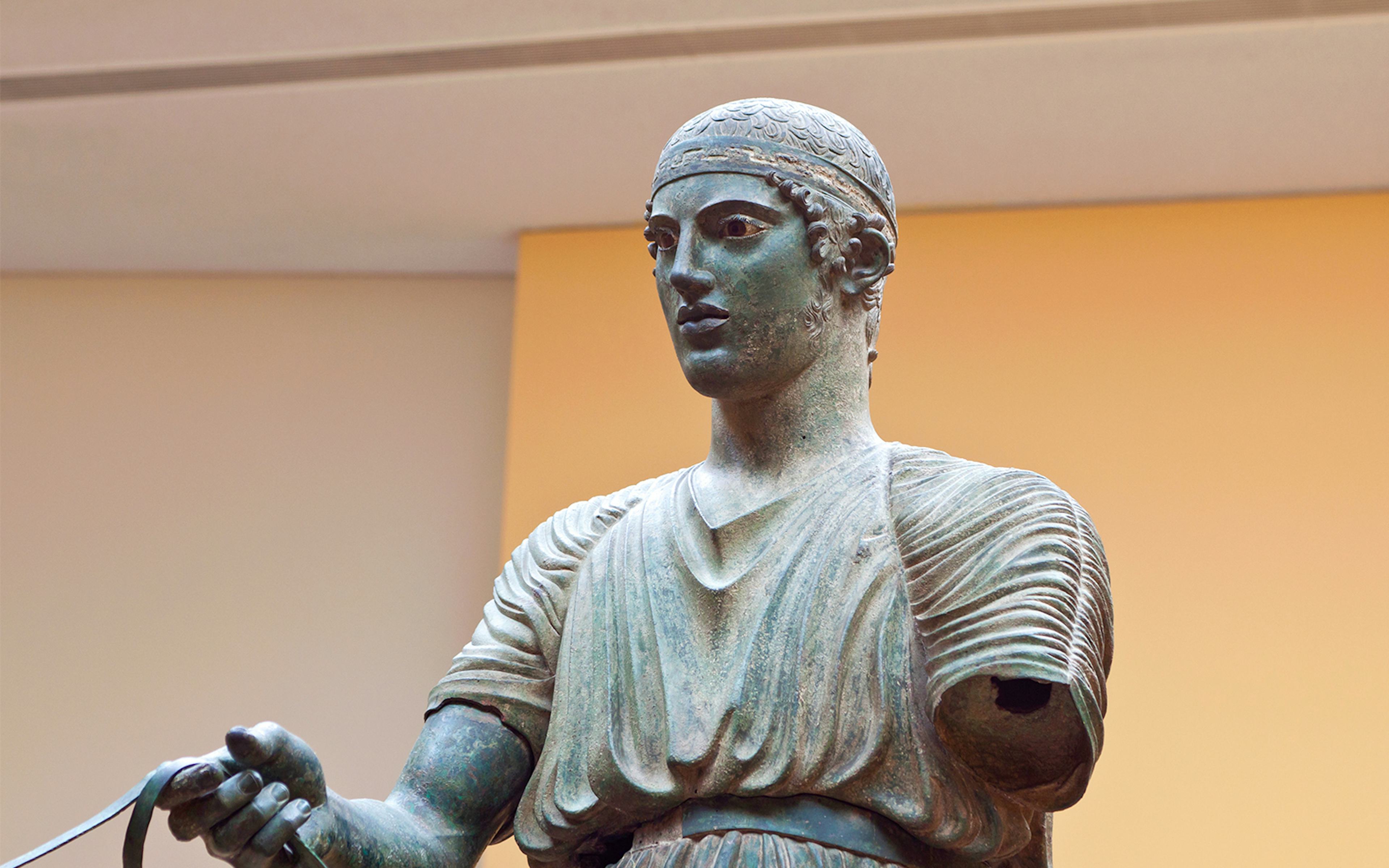
Charioteer of Delphi
The Charioteer of Delphi is a 5th-century BCE bronze statue depicting a charioteer believed to have won the Pythian Games in 478 or 474 BCE. Found nearly intact in the Sanctuary of Apollo, only the left forearm is missing, with fragments of the chariot and horse also discovered.
The Sphinx of Naxos
The Sphinx of Naxos is a 2.22-meter-tall marble statue from the 6th century BCE, depicting a mythical creature with the head of a woman, the body of a lioness, and bird wings. Originally atop a 12.5-meter-tall Ionic column near the Temple of Apollo, it is thought to be a votive offering to Apollo from the people of Naxos.
The Kouroi of Delphi
This pair of 6th-century BCE marble kouroi depicts nude male youths, likely representing the brothers Kleobis and Biton. Believed to have been created in Argos and placed at Delphi as votive offerings to Apollo, these statues were excavated near the Treasury of the Athenians in 1893 to 1894.
Chryselephantine objects
Chryselephantine sculptures, made of gold and ivory, were highly valued in Ancient Greece. In 1939, several such objects, including statues of Apollo, Artemis, and Leto, as well as fragments of a silver bull, were found near Delphi’s Sacred Way and are displayed in the museum’s Room 4, dating back to the 6th century BCE.
Dancers of Delphi
The Dancers of Delphi, crafted from Pentelic marble, features three young female figures posed on a column of acanthus leaves, giving the appearance of dancing. Believed to date back to the 4th century BCE, it is thought to represent the three daughters of Cecrops, a legendary king of Athens, and was discovered during excavations in 1894.
Omphalos
In Greek mythology, the Omphalos, or 'navel of the world', was the stone Zeus used to mark Delphi as the center of the Earth. The original marble Omphalos, a conical beehive-shaped stone with carved reliefs, is displayed in the museum, while a copy marks the spot at the archaeological site.
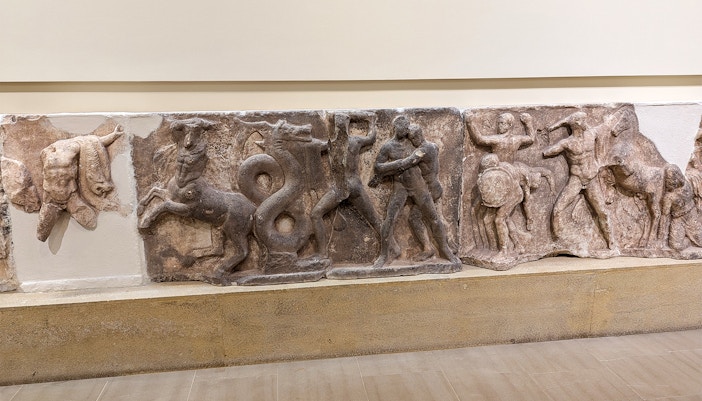
The friezes of the Siphnian Treasury
Made entirely of marble, this 6th-century temple-like structure was decorated with sculptural reliefs depicting scenes from Greek mythology, such as the Gigantomachy (battle between the Olympian gods and the giants), the Trojan War, and the Judgement of Paris. While the treasury fell into ruins, slabs of the frieze were uncovered and are displayed at the museum.
Statue of Antinous
Antinous, a young Greek and favorite companion of the Roman Emperor Hadrian, died suddenly in the 2nd century CE. In his honor, Hadrian ordered statues of Antinous to be placed across the empire, one of which, made of Parian marble, was installed at Delphi and uncovered during excavations in 1894.
Delphi Museum exhibits | A walk through ancient Greece
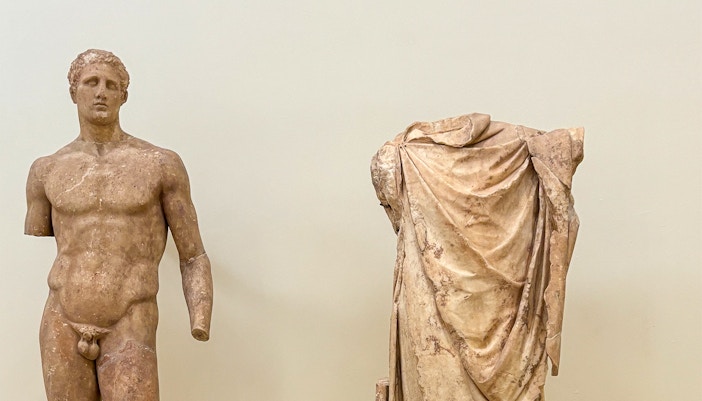
Rooms 1 & 2
These rooms display the earliest artifacts from Delphi, including Mycenaean clay figurines (1750-1050 BCE) and 7th-8th century BCE bronze votive offerings, such as warrior figurines, shields, helmets, and a bronze Daedalic kouros.
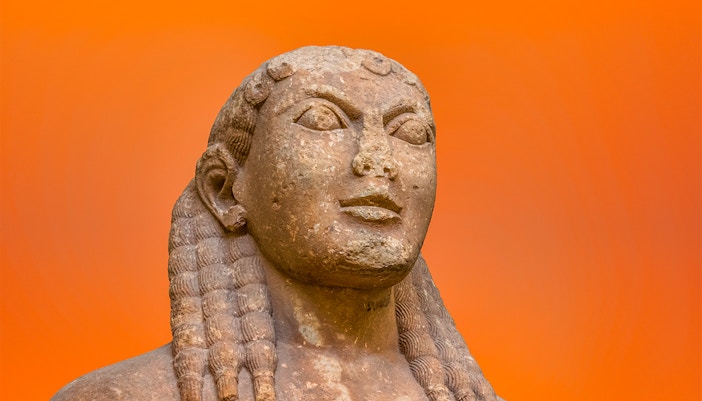
Room 3
The twin Kouroi statues of Kleobis and Biton, dating to the 6th century BCE, are displayed here, along with metope fragments from the Treasury of the Sikyonians that depict scenes from Greek myths like the Argonauts and the Dioscuri.
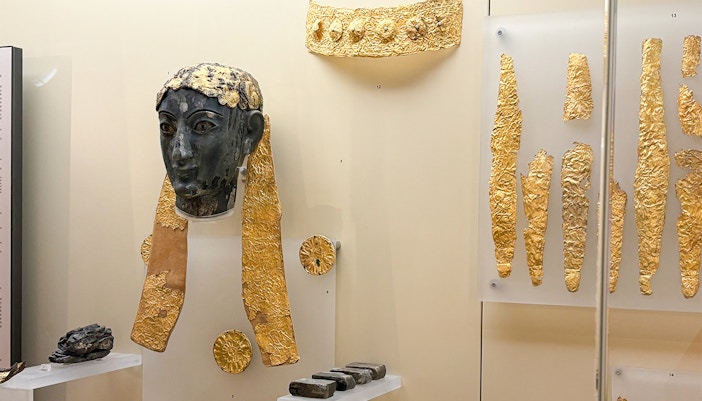
Room 4
This section showcases chryselephantine objects found near the Sacred Way in 1939, including statues of Apollo, Artemis, and Leto, as well as fragments of a silver bull and other precious gold and silver artifacts.
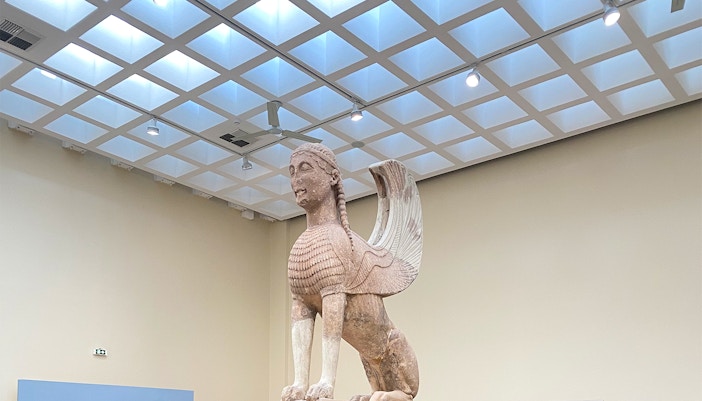
Room 5
The famous Sphinx of Naxos, a 2.2-meter statue, is on display alongside parts of the frieze from the Siphnian Treasury, which depicts scenes from the Trojan War and other Greek myths.
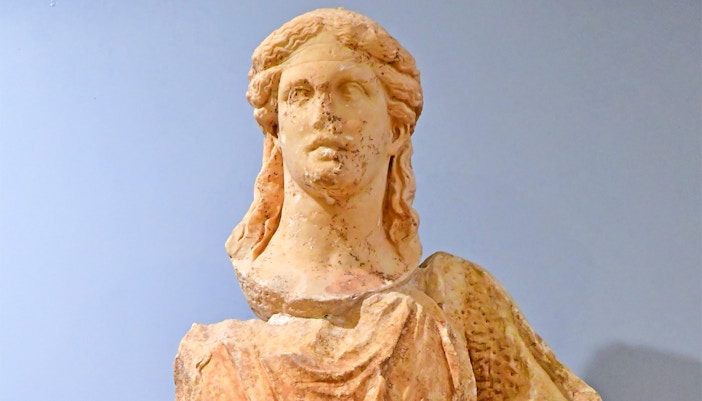
Room 6
Portions of the 4th-century BCE Temple of Apollo pediments are exhibited here, including sculptures of Dionysus, Nike, and the horses of Apollo’s chariot.
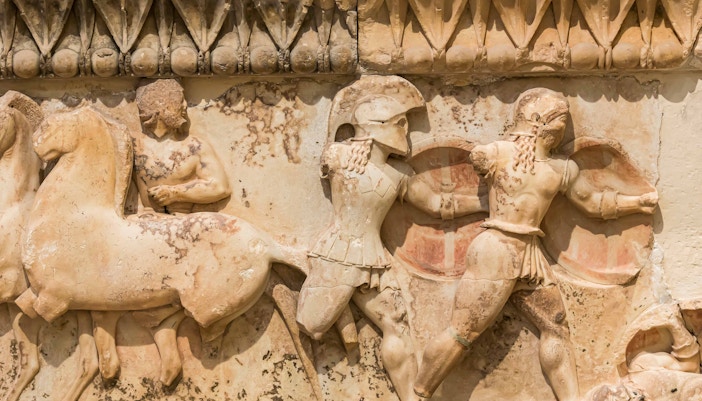
Room 7
Room 7 displays artifacts from the Treasury of the Athenians, including pediments and metopes depicting the labors of Hercules and the heroic acts of Theseus.
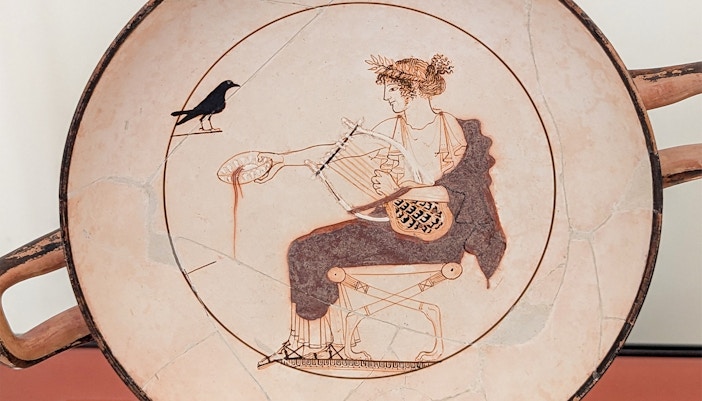
Room 8
This section features fragments of the Delphic hymns, the world’s oldest known musical notation, along with statues of armed Amazons on horseback.
Rooms 9 & 10
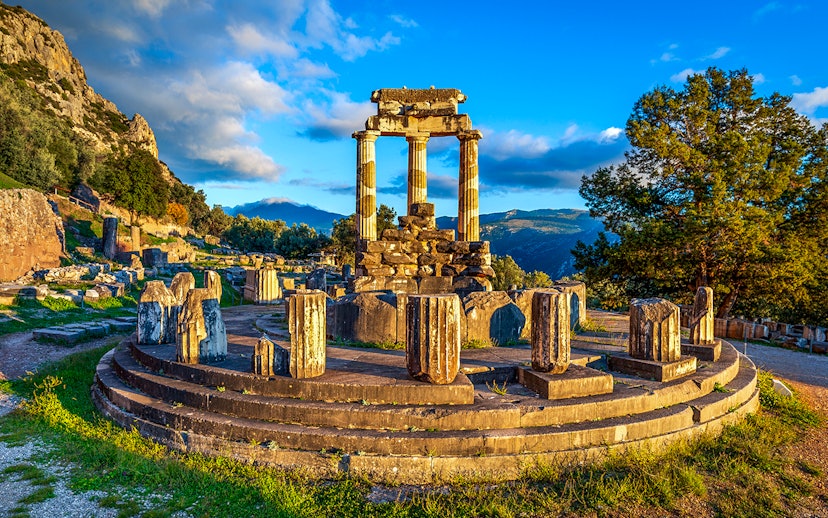
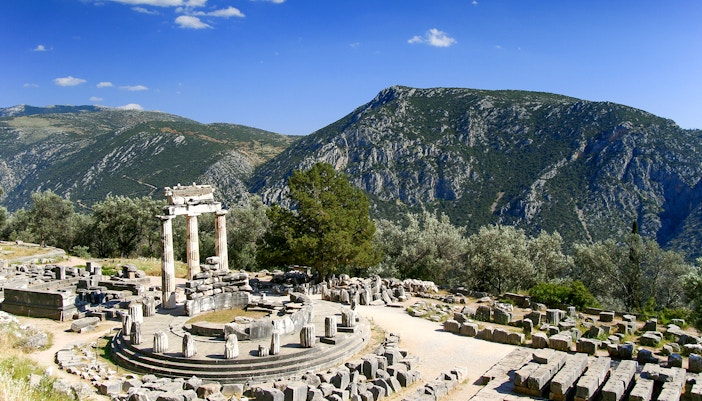
These rooms showcase artifacts from the Sanctuary of Athena Pronaia, including metopes from the 4th-century BCE Tholos, sculptures from the Treasuries of the Massaliots and Doric, winged Nike torsos, terracotta decorations, acroteria, and small bronze figurines.
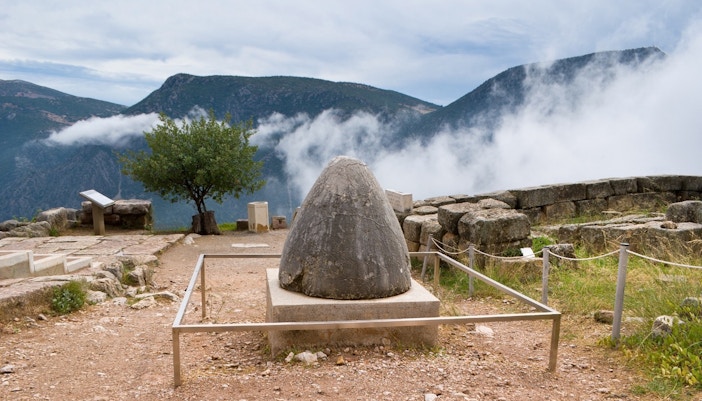
Room 11
Main exhibits in this section include the 'Dancers of Delphi' and the 'Omphalos', along with late Classical and early Hellenistic objects like statues of Apollo, Aghias, and Daochos II’s votive offerings.
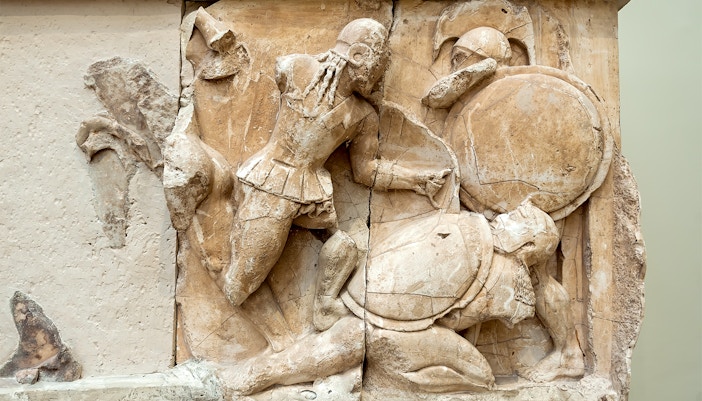
Room 12
In this section, visitors will find objects from the late Hellenistic and early Roman periods, including the Statue of Antinous and a circular altar from the Sanctuary of Athena Pronaia.
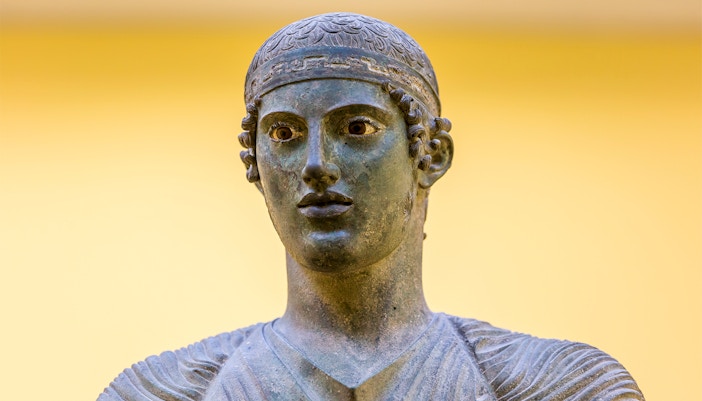
Room 13
The Charioteer of Delphi, a life-size bronze statue, is the centerpiece of this gallery and is widely regarded as one of the finest examples of 5th-century Greek sculpture.
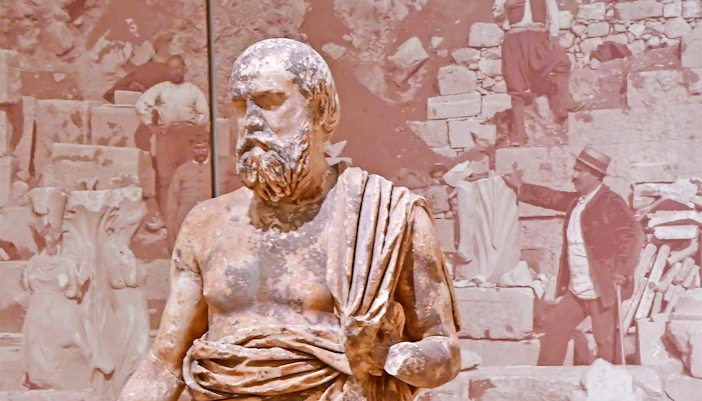
Room 14
This final gallery houses objects from the last years of the sanctuary, including marble heads of Heracles and a philosopher, possibly Plutarch, dating to the 1st and 2nd centuries AD.
History of the Delphi Archaeological Museum
- 1903: The Delphi Archaeological Museum opens on May 2, 1903, to house the finds from the Great Excavation, which began in 1892.
- 1903 to 1935: Excavations continue; the archaeologists, led by Théophile Homolle, also create plaster-cast reconstructions of the site’s main monuments.
- 1935 to 1939: Due to limited space, a new museum building is constructed and inaugurated in 1939. The new building allows for better organization of the artifacts, which are now arranged chronologically, while plaster-cast reconstructions are removed.
- 1939 to 1952: The museum is closed during World War II, and its artifacts are stored or sent to Athens for safekeeping. After the civil war in Greece, the museum remains closed until 1952.
- 1952 to 1958: The museum reopens and welcomes visitors for six years, but it soon becomes inadequate to handle the increasing number of visitors and growing collection.
- 1958 to 1961: The museum undergoes refurbishments and expansions, with two new halls added. The artifacts remain arranged chronologically, with a special focus on sculptures and statues.
- 1961 to 1998: The museum becomes one of Greece’s top museums, attracting over 300,000 visitors by 1998.
- 1999 to 2003: Renovations take place under Greek architect Alexandros Tombazis, modernizing the museum’s interiors and rearranging many exhibits to better accommodate rising visitor numbers.
Frequently asked questions about the Delphi Archaeological Museum
The ruins of the Delphi sanctuary are impressive, but the museum showcases its most extraordinary finds. The galleries provide a deeper understanding of Delphi’s role as a spiritual and cultural hub in Ancient Greece.
It typically takes about 1 to 2 hours to fully explore the exhibits at the Delphi Archaeological Museum.
If you book a Delphi full-day guided tour, the expert guide accompanying you will show you around the archaeological site as well as the museum.
It’s best to book your Delphi tickets online in advance to visit the site and the museum on the date and time that you prefer. Delphi is a popular attraction and tickets sell fast, especially during the peak season from June to August.
You can take photographs and videos of the exhibits at the museum for personal use. If you want to film for commercial purposes, you’ll need prior permission from the museum authorities.
Yes, entry tickets to the Delphi archaeological site and museum include an audio guide in English. You can explore the museum at your own pace with these tickets.
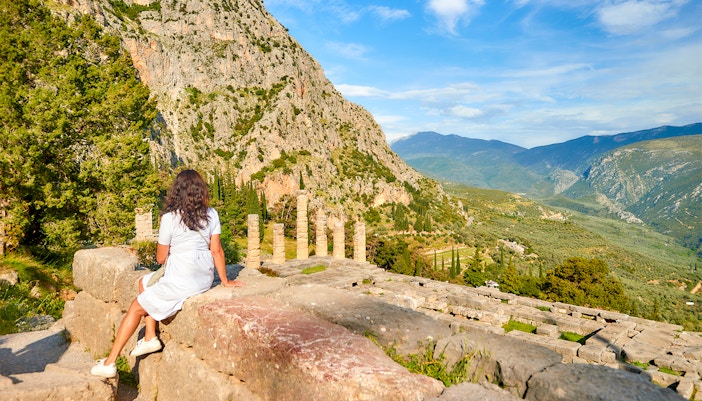
Apart from the museum, the Delphi guided tours give you access to the entire archaeological site, including the Temple of Apollo, the Sanctuary of Athena Pronaia, the theater, the ancient stadium, and other monuments at the site.
The Delphi Archaeological Museum is entirely wheelchair-friendly, including elevator access and a specially designed wheelchair-accessible route for those who require it. A designated restroom and parking spaces for people with disabilities are available. It also offers pamphlets in Braille for those who are blind or have visual impairments.

.svg?auto=compress%2Cformat&w=156&h=48&q=90&crop=faces&fit=crop)