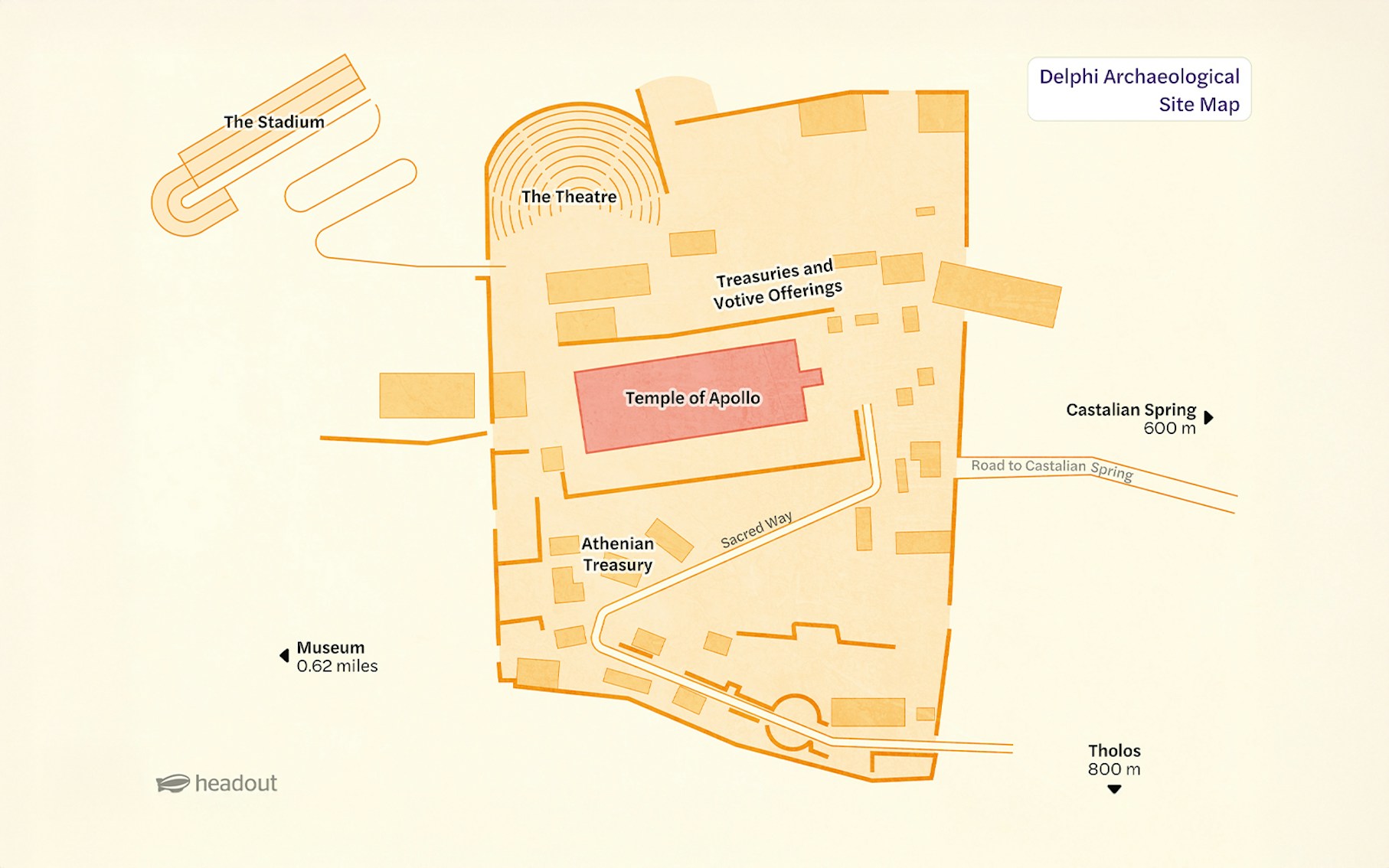
- Start at the lower entrance and follow the Sacred Way uphill, passing the Roman Agora and early ruins.
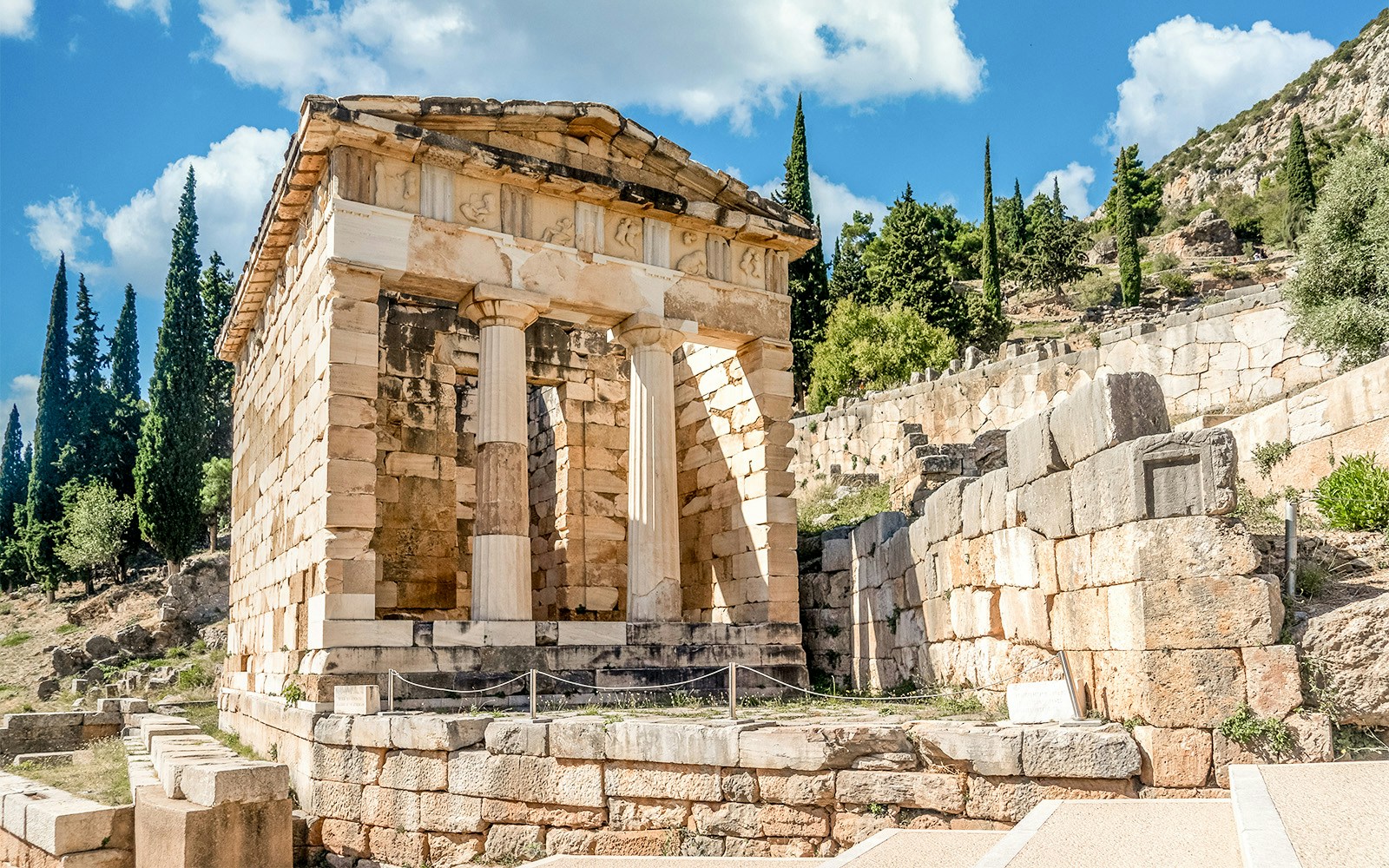
- Continue toward the Athenian Treasury, one of the best-preserved buildings along the path.
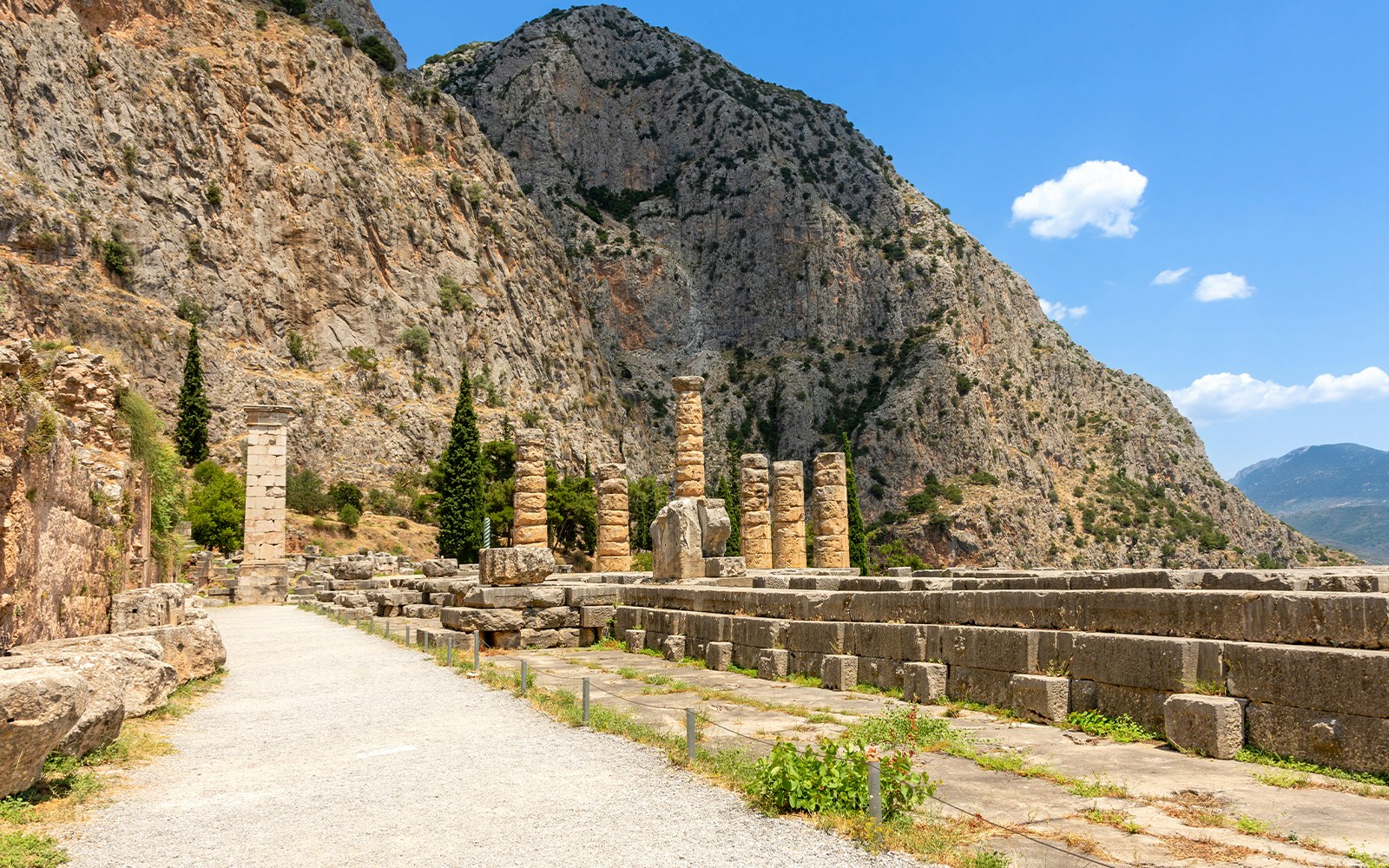
- Move upward to reach the Temple of Apollo, the centerpiece of Delphi and home of the ancient Oracle.
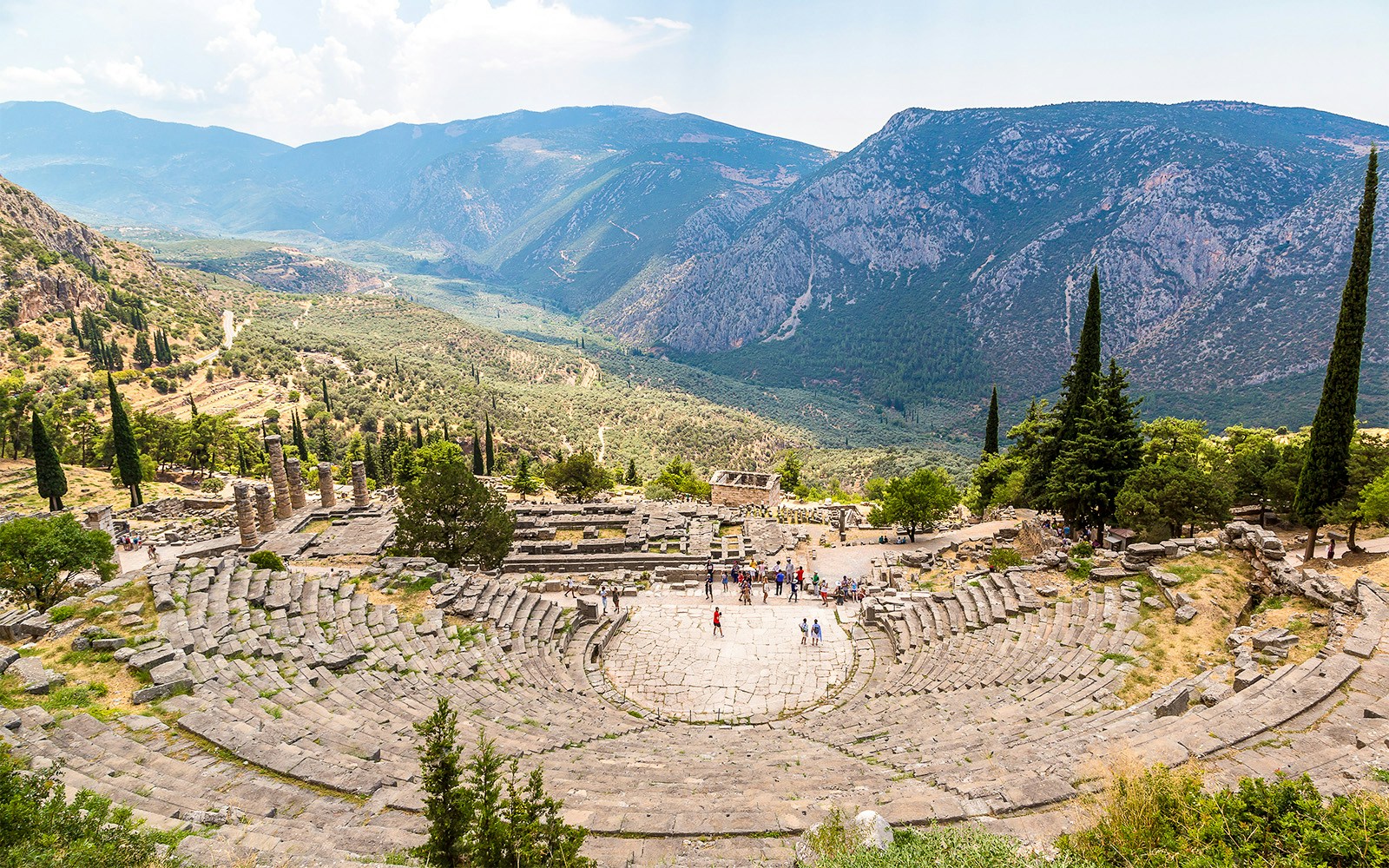
- Follow the path that curves behind the temple to arrive at the Theater, offering wide views over the valley.
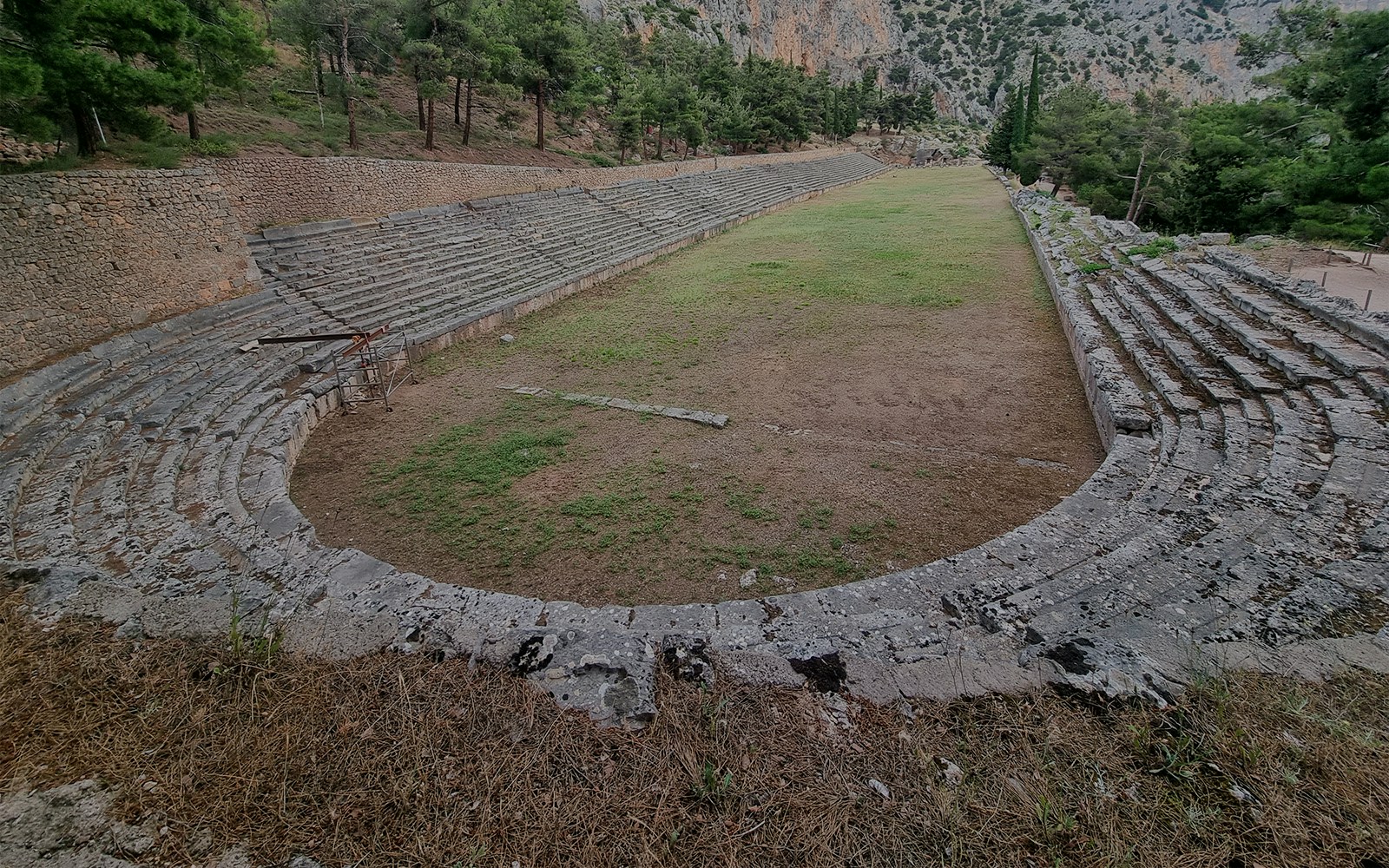
- Continue the climb to the Stadium at the top of the site, where the ancient Pythian Games were held.
- On your way back down, take the same route or explore small side paths that lead to viewpoints and lesser-known ruins.
Your essential Delphi map for a smooth on-site experience
Step into the heart of ancient Greece with this easy-to-read Delphi map, designed to help you understand the site’s layout at a glance. It highlights key monuments, pathways, and viewpoints, including the Temple of Apollo, the Treasury of the Athenians, and the Theatre, so you can plan ahead and navigate confidently once you’re on the ground.
Map of Delphi | Your guide to key monuments & paths
Navigating your way around Delphi
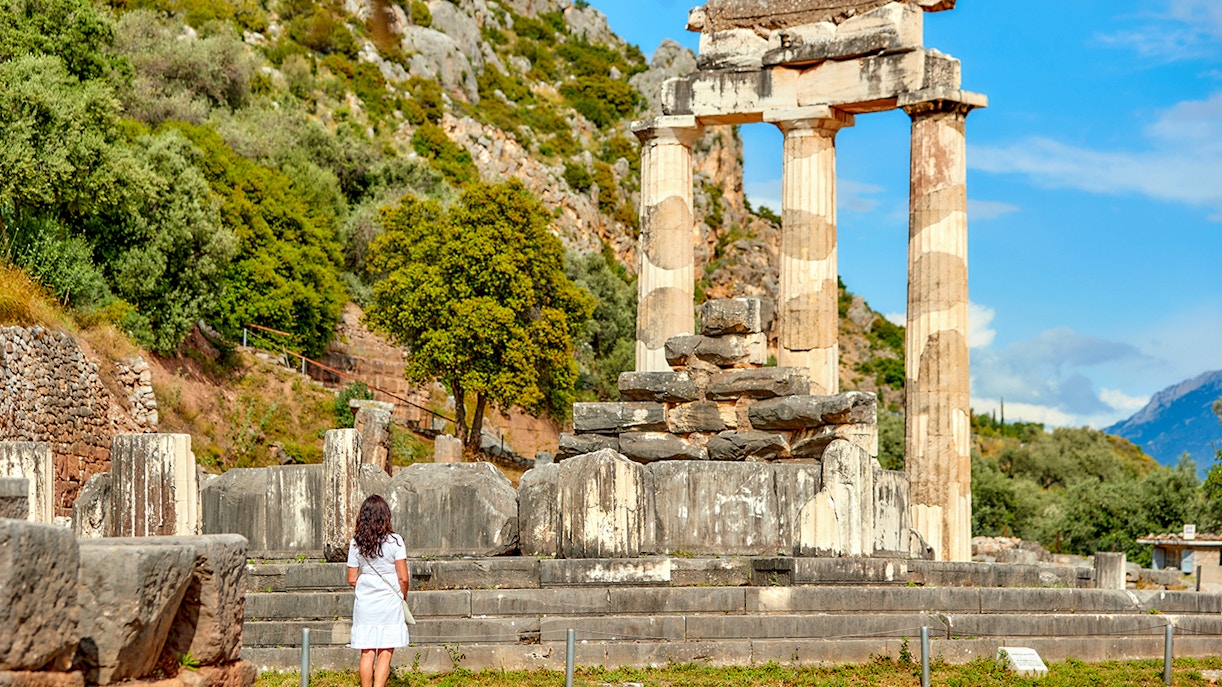
Visitor facilities
- Restrooms: Available near the entrance and inside the museum; note that there are no restrooms inside the archaeological site itself.
- Shaded rest spots: Occasional shaded areas and benches along the pathway where you can pause, especially helpful on hot days.
- Water fountains: Found near the entrance and museum area; refill options inside the site are limited, so it’s best to bring water with you.
- Gift shop: A small shop near the entrance and museum selling books, replicas, and Delphi-themed souvenirs.
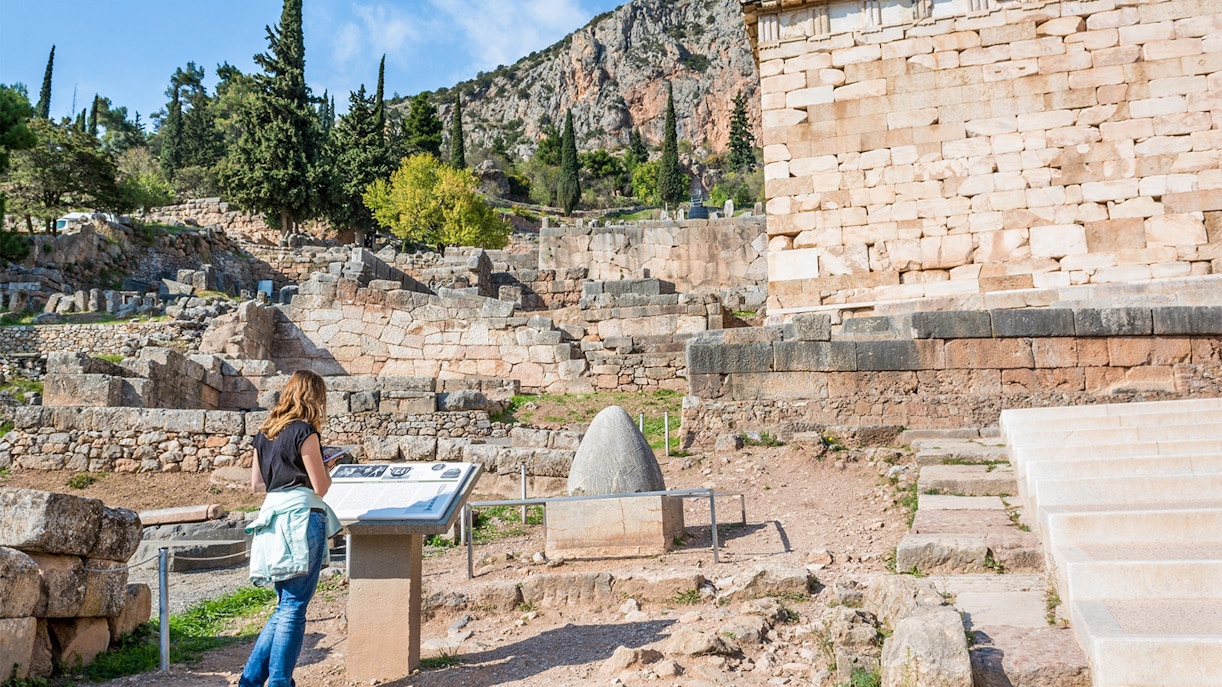
- Information boards: Clear signs throughout the site providing historical details and context for the main monuments, helping visitors follow the story of Delphi as they move through it.
- Parking area: A designated parking lot close to the main entrance for cars and tours, making access straightforward.
Delphi's must-see monuments
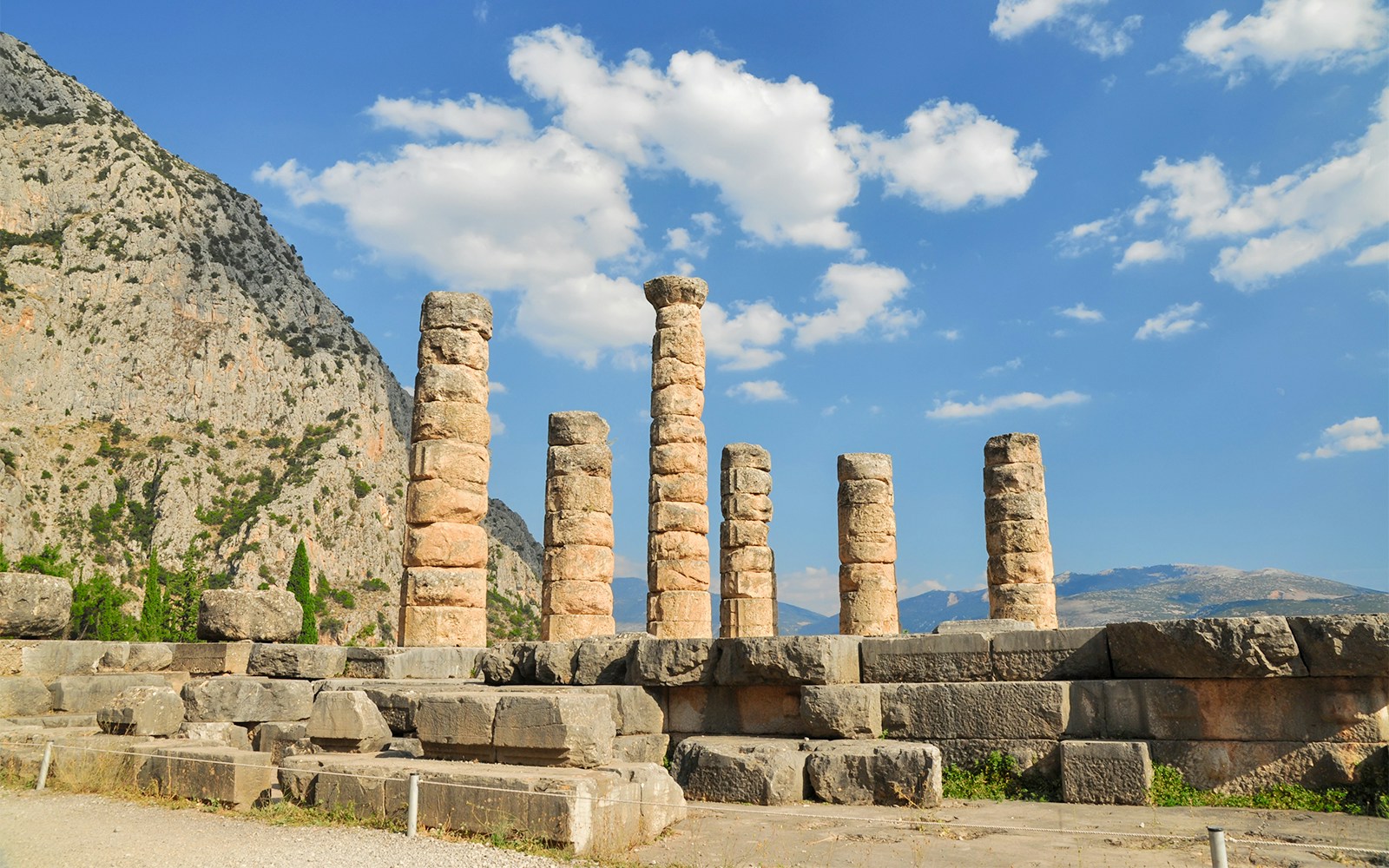
Temple of Apollo
The heart of ancient Delphi and the seat of the famous Oracle, where prophecies were delivered to leaders from across the Greek world.
Tips to note when visiting the Delphi archaeological site
- Wear comfortable shoes, as the site involves uphill walking on uneven stone paths.
- Bring water with you, since refill points inside the archaeological site are limited.
- Arrive early in the morning or later in the afternoon to avoid peak heat and crowds.
- Use the map to plan your route in advance so you can move efficiently between the main landmarks.
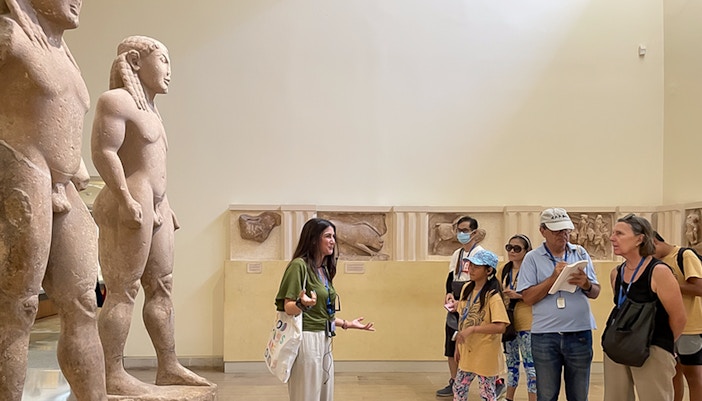
- Leave enough time to **visit the Archaeological Museum, which adds valuable context to what you see outside.
- Check the weather forecast and bring sun protection, as shaded areas along the Sacred Way are limited.
- Follow the marked paths and signs to stay oriented, especially when visiting upper areas like the Theatre and Stadium.
- Take short breaks at viewpoints along the way to enjoy the scenery and avoid fatigue during the climb.
Frequently asked questions about exploring Delphi with a map
The Delphi map helps you understand the site’s uphill layout and shows how the main monuments connect along the Sacred Way. Using it as you climb ensures you don’t miss smaller ruins or viewpoints hidden between major landmarks.
While Delphi has directional signs and information boards, a map provides a clearer overview of distance, elevation, and the order of the monuments. It also helps you plan your route and manage your time more efficiently.
Most visitors begin at the lower entrance and follow the Sacred Way upward toward the Temple of Apollo and the Theater. Starting here ensures you experience the site in the same sequence as ancient pilgrims.
Yes, the map shows the path that continues past the Theater to the Stadium, which is easy to miss if you’re not expecting the final uphill climb. It helps you gauge the distance and decide whether you want to include it in your visit.
A map gives you a quick overview of walking distances between monuments and helps you estimate how long the full route will take. It’s especially helpful if you’re visiting during a tight schedule or with a tour group.
.svg?auto=compress%2Cformat&w=156&h=48&q=90&crop=faces&fit=crop)

