- Also known as: The Apollonion
- Address: Delphi 330 54, Delfi 330 54, Greece | Find on maps
- Location: The Delphi archaeological site, within the sanctuary complex
- Function: Shine to the Greek god Apollo
- Built in: 650 BCE, 510 BCE, 330 BCE
- Architect(s): Spintharos, Xenodoros, and Agathon, and funded by the wealthy Alcmaeonidae family of Athens.
- Highlights: Delphic maxims, the cella, the adyton
Delphi Archaeological Site
4.6(4,019)
The Temple of Apollo at Delphi
Included with Delphi Archaeological Site tickets
Timings
RECOMMENDED DURATION
5+ hours
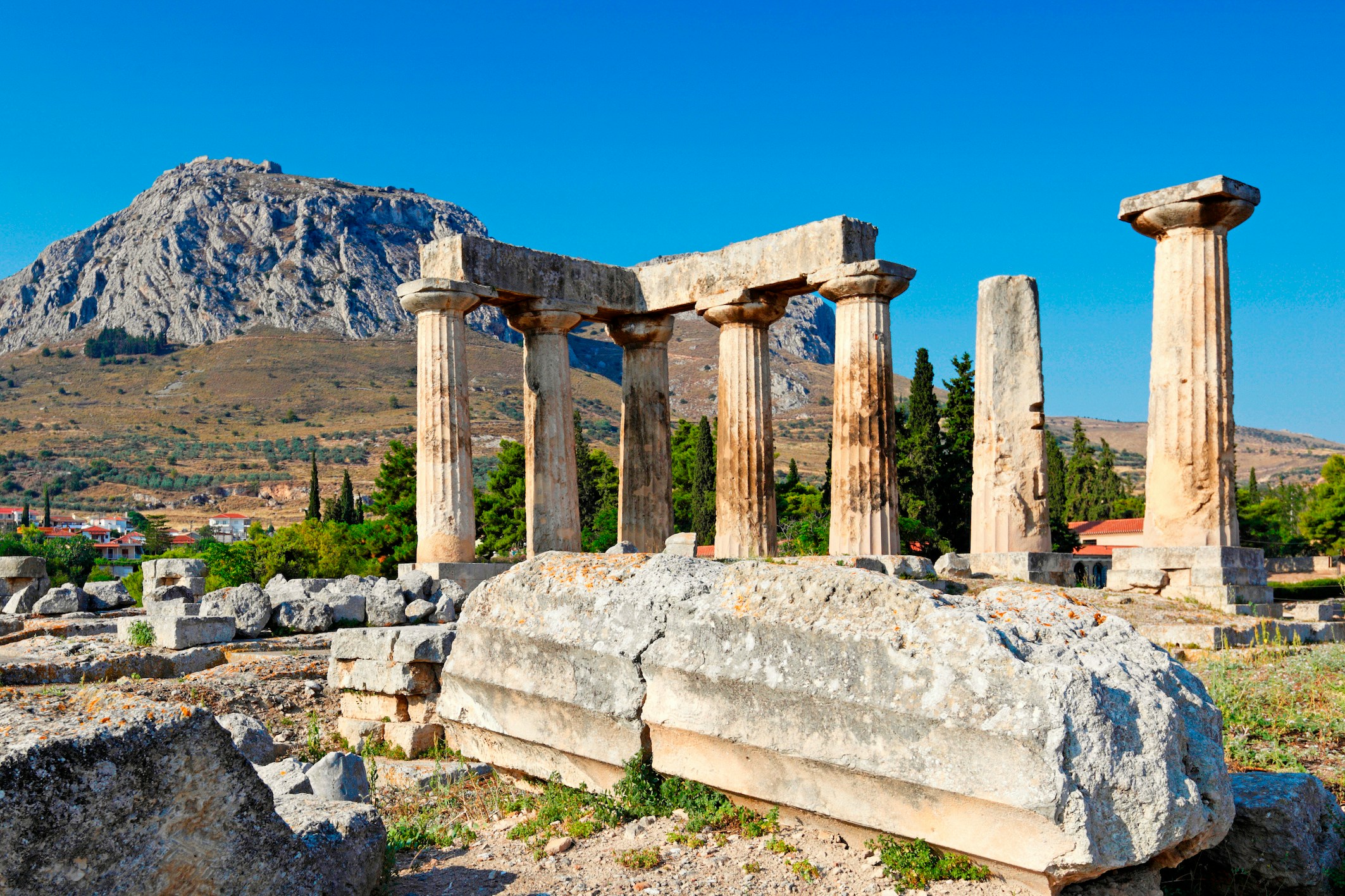
The Temple of Apollo | A shrine to the patron god of Delphi
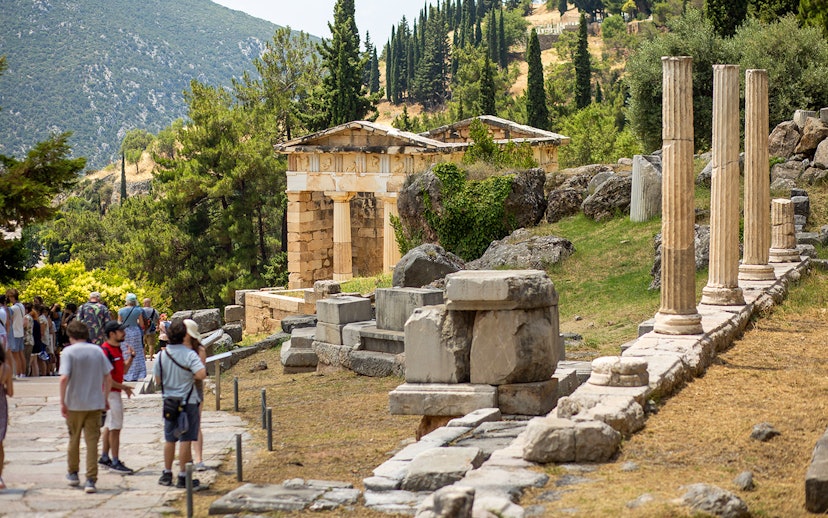
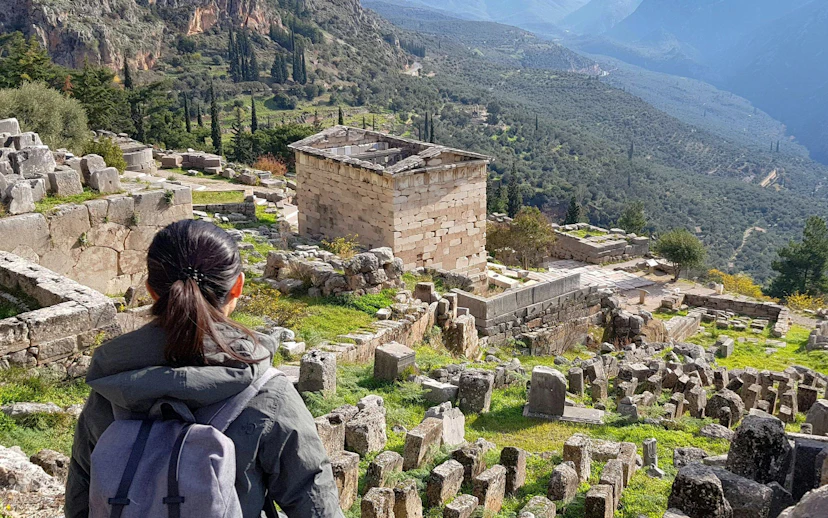
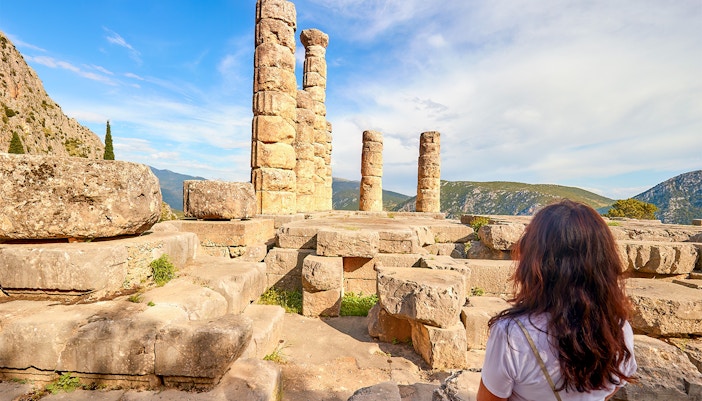
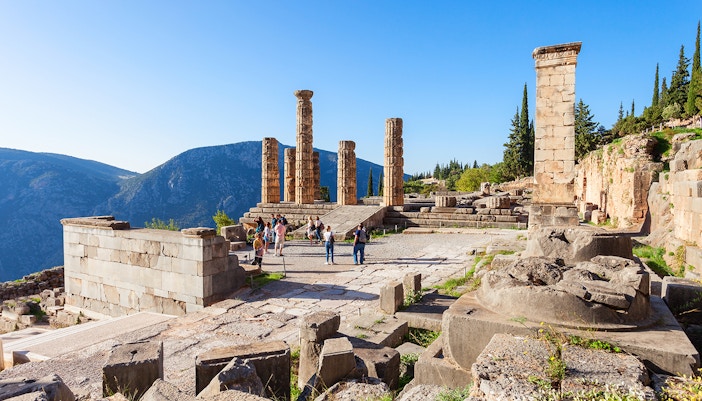
In Greek mythology, Apollo, the god of prophecy, claimed Delphi as the site of his sacred sanctuary after slaying the serpent Pytho, who once guarded it. He established his Oracle, Pythia, at Delphi, transforming it into one of the most important Panhellenic religious centers. Over time, multiple temples were constructed in Apollo's honor, with the most famous being the 4th-century BCE temple, whose impressive ruins remain today.
How to access:
Access to the Temple of Apollo is included with your Delphi ticket. Whether you prefer a guided tour, an audio tour, or a more independent day tour, all options provide entry to the temple and offer valuable insights into its history and significance.
Quick facts
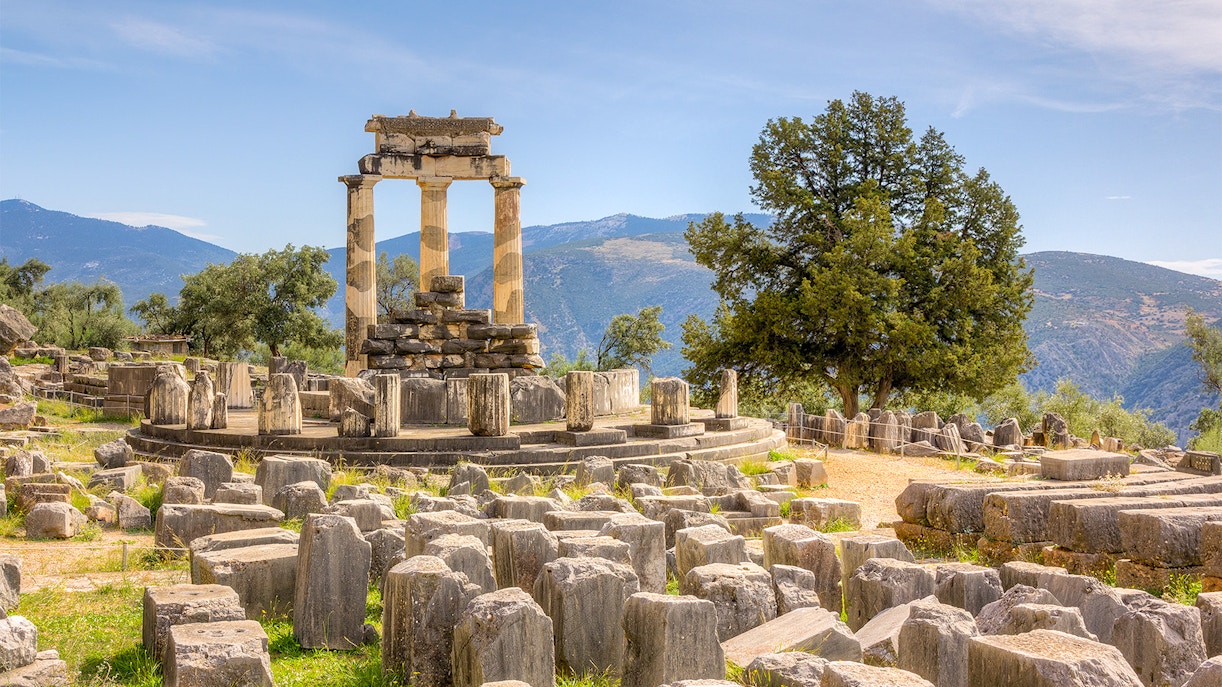
Highlights of the Temple of Apollo
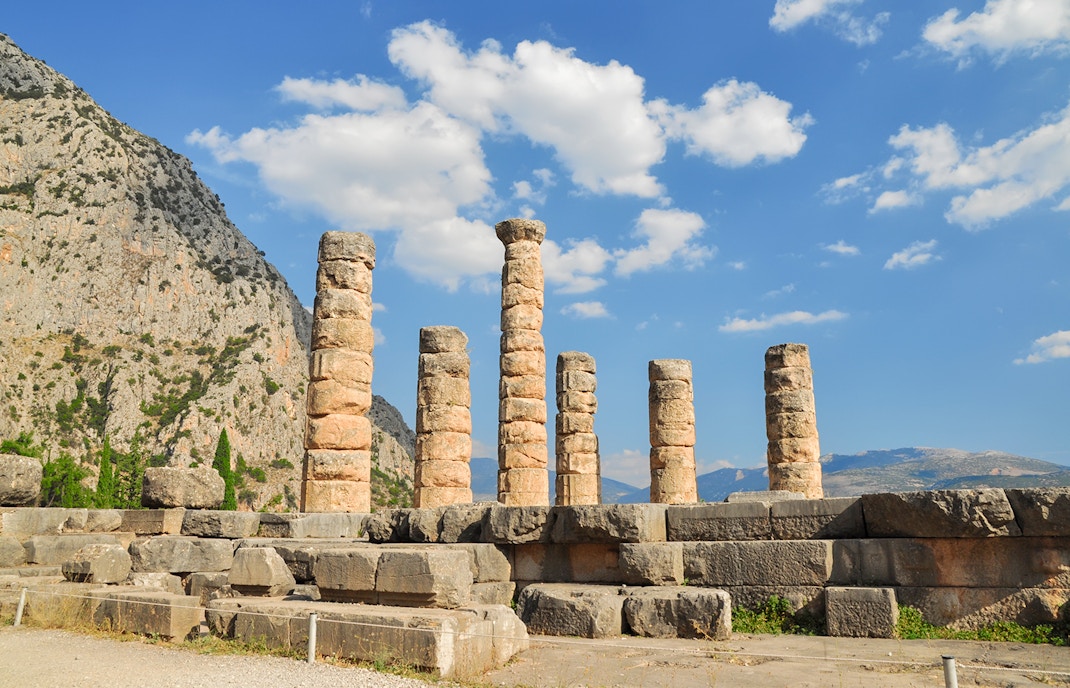
Delphic maxims
Above the temple entrance, just below the pediment, are the Delphic maxims: “Know yourself,” “Nothing in excess,” and “A pledge means ruin.” Believed to have been created by seven Greek philosophers in the 6th or 5th century BCE, these timeless principles have influenced philosophy for over 2,500 years.
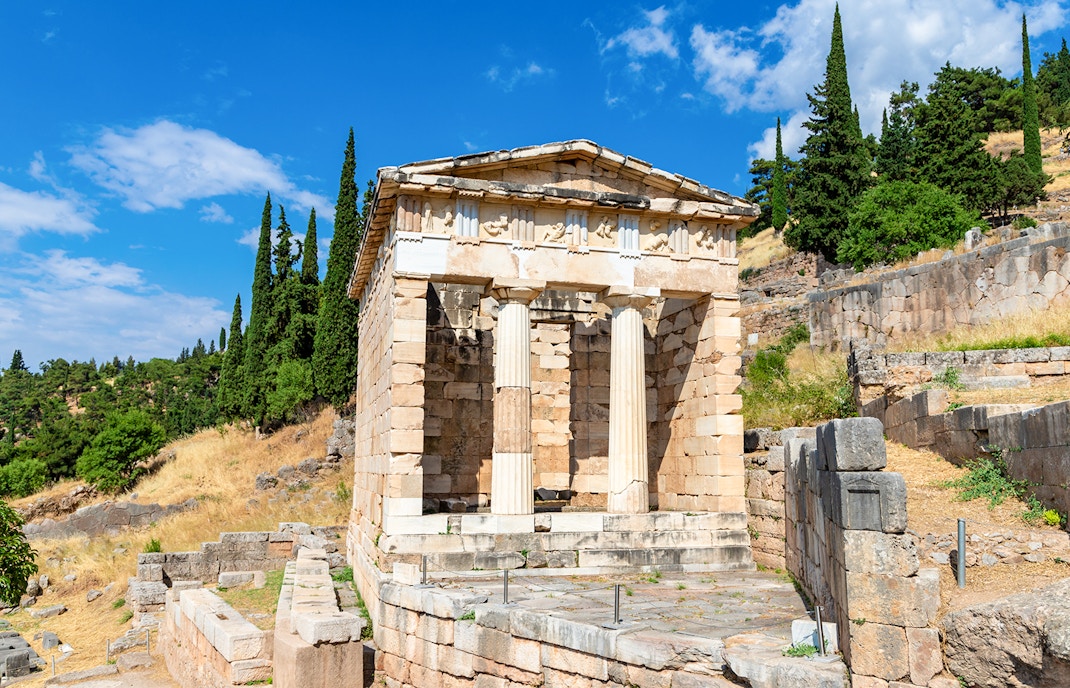
Cella (the inner chamber)
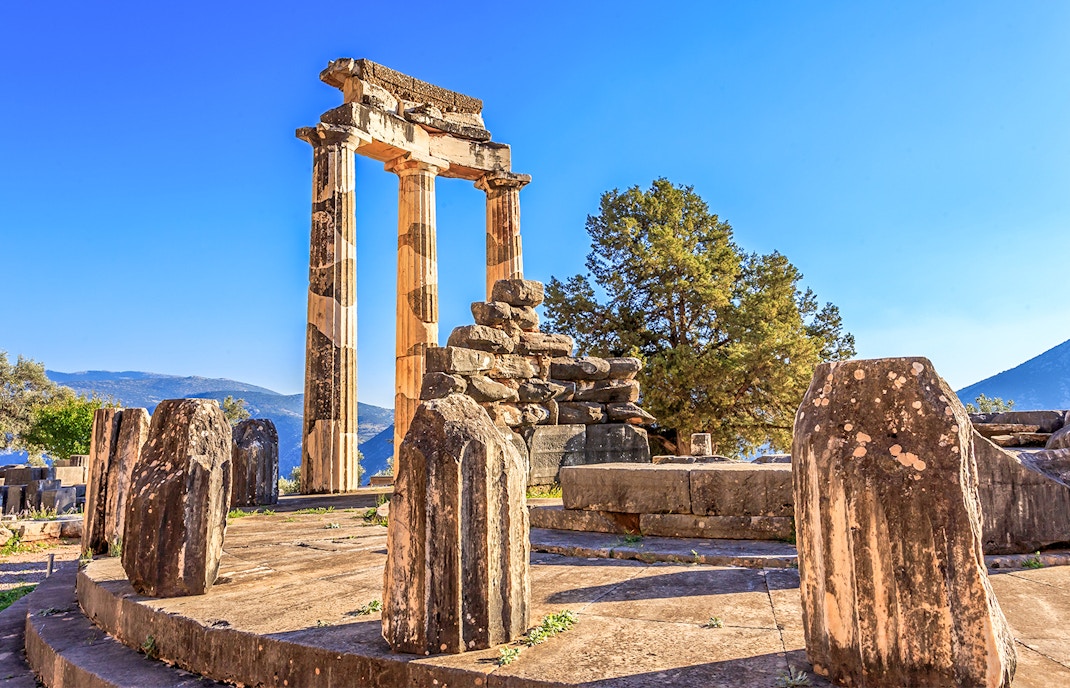
The first room inside the Temple of Apollo was the cella, the inner chamber where pilgrims waited to consult the Oracle. This room is thought to have housed a golden statue of Apollo and the Omphalos, the stone marking Delphi as the center of the world. It also contained altars dedicated to Poseidon, god of the sea, and Hestia, goddess of the hearth.
Adyton (the sacred sanctum)
The adyton was the most sacred room in the temple, accessible only to Pythia and the priests of Apollo. Located behind or beneath the cella, it is where Pythia sat on a three-legged stool, inhaled vapors from a chasm in the floor, and received prophecies from Apollo.
Worship of Dionysus
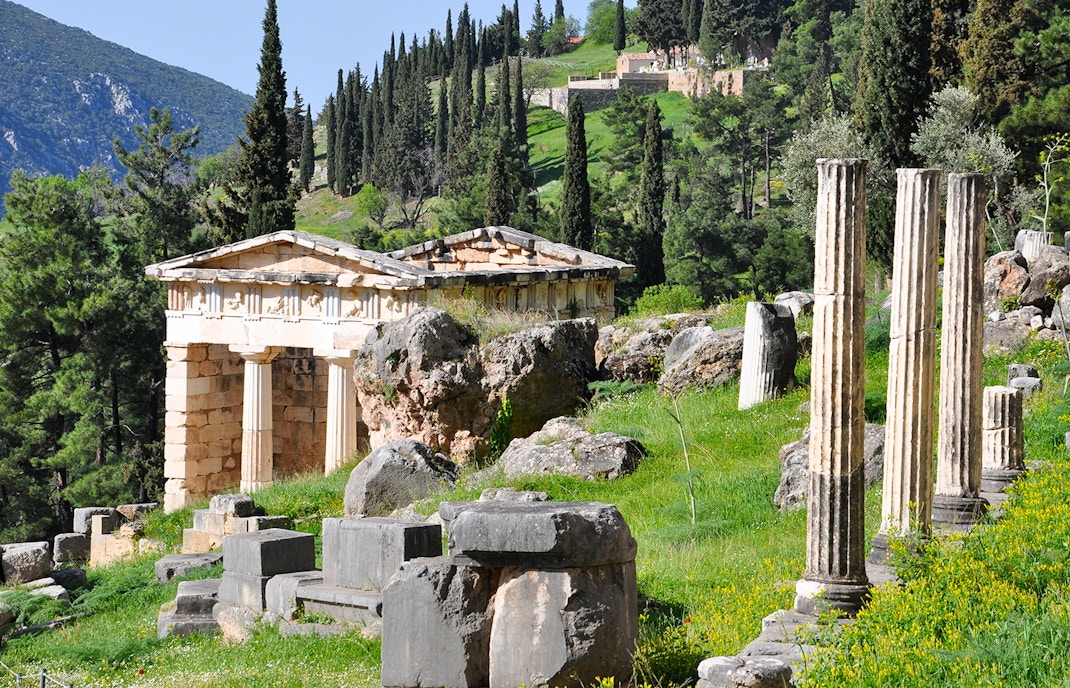
Interestingly, despite being dedicated to Apollo, the temple also honored Dionysus, the Greek god of wine and festivity. For three months each winter, the temple became the domain of Dionysus, where his followers held festivals and rituals in his honor. It is also believed that the tomb of Dionysus lies within the Temple of Apollo.
A brief history of the Temple of Apollo
According to Greek mythology, six temples were built to Apollo. The first three were made from laurel branches, wax and bees’ feathers, and bronze. However, historical and archaeological evidence identifies the fourth, fifth, and sixth temples as the actual first, second, and third.
- Around 800 BCE: Delphi becomes a sanctuary of Apollo and a site of religious significance. Pythia, the high priestess of Apollo, is established as the Oracle of Delphi.
- 650 BCE: The first Temple of Apollo is built at Delphi, constructed from poros stone.
- 548 BCE: The first temple is destroyed in a fire.
- 510 BCE: The second Temple of Apollo is constructed.
- 373 BCE: The second temple is destroyed in an earthquake. Construction of the third temple begins shortly after.
- 356 to 346 BCE: The third Sacred War, fought between the Phocians and the Amphictyonic League, interrupts the construction of the third temple.
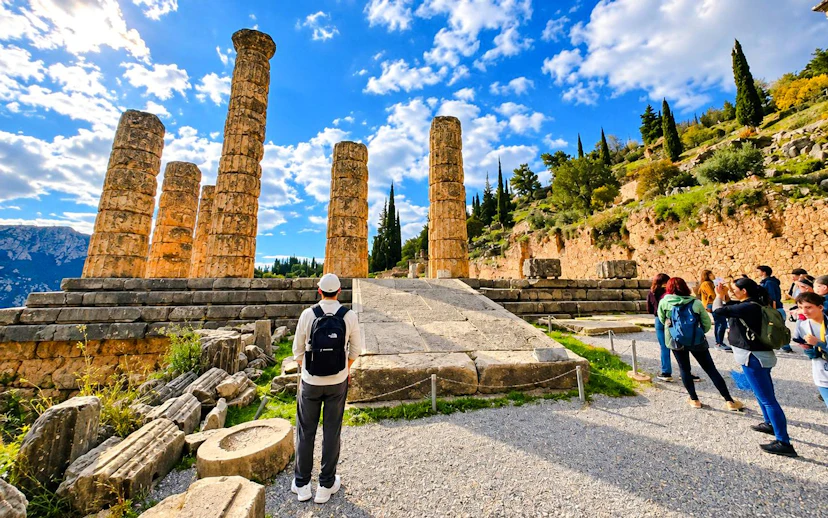
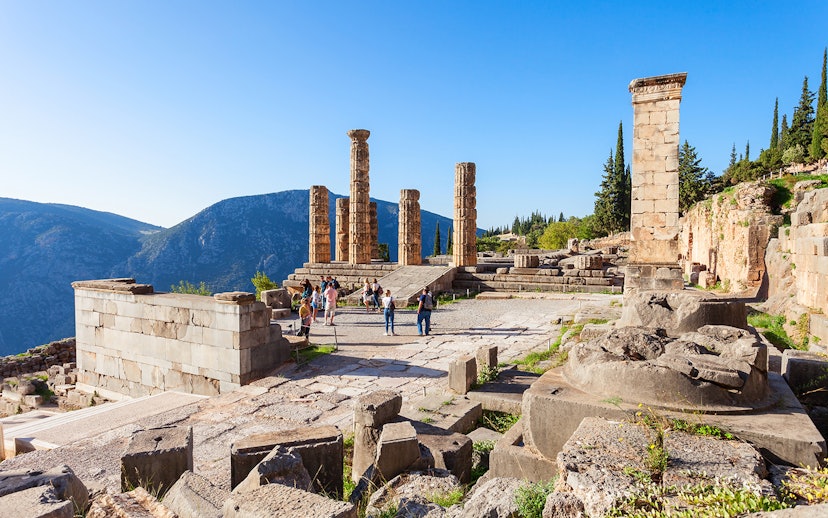
- 330 BCE: The construction of the third Temple of Apollo is completed. The ruins of this temple are what we see at Delphi today.
- 393 AD: Roman Emperor Theodosius I orders all pagan sanctuaries in Greece to be closed. The Oracle of Delphi makes its last prophecy. With the decline of Pagan worship and the rise of Christianity in Greece, the Temple of Apollo and the Delphi sanctuary are abandoned and forgotten.
- 1892 AD: The site of the Temple of Apollo is discovered during modern archaeological excavations at Delphi by the French Archaeological School of Athens.
Architecture & layout
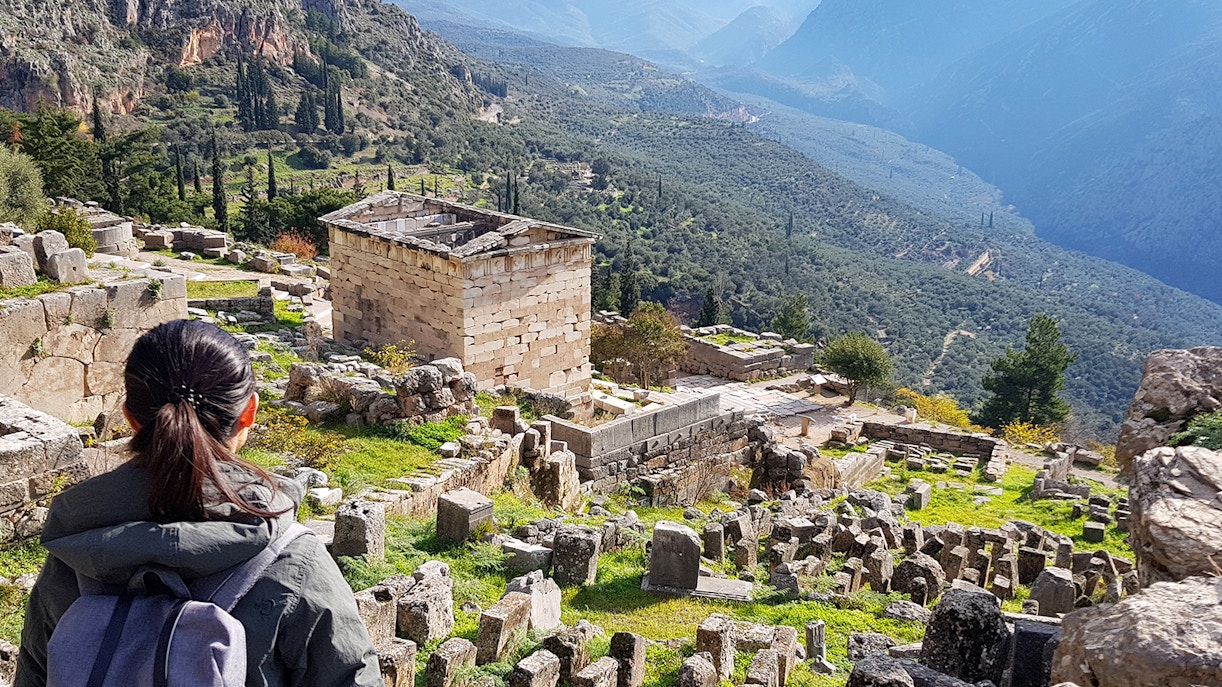
The Temple of Apollo in Delphi was built on a terrace halfway up Mount Parnassus, forming the core of the sanctuary's precinct, the "temenos." The rectangular temple measured 60 meters by 20 meters and stood on a crepidoma with a ramp leading to the entrance.
The temple followed a peripteral design, with a porch surrounded by columns on all sides—six columns on the front and back, and 15 along the longer sides. It was constructed in the Doric style, characterized by sturdy columns with simple capitals.
Constructed from Parian marble and local limestone, the temple's floors were paved with grey stone. Its facades were adorned with pediments depicting Apollo’s arrival in Delphi, while the Delphic maxims were inscribed beneath. The exterior also featured metopes depicting Greek gods defeating monsters, such as Apollo slaying Python.
Frequently asked questions about the Temple of Apollo at Delphi
The Temple of Apollo at Delphi was the seat of Apollo’s high priestess and Oracle, Pythia, who communicated his prophecies to his worshippers. It was the main shrine around which the entire sanctuary of Delphi was built.
The Temple of Apollo was the main structure around which the entire sanctuary was built. Guided tours of Delphi cover the entire archaeological site, including the temple ruins.
Yes, entry tickets to the Delphi archaeological site and museum include an English audio guide for a self-guided tour of the Temple of Apollo ruins.
The best time to visit the Temple of Apollo is during spring (April to June) and fall (September to November) when the weather is mild and the site is less crowded.
We recommend booking your Delphi tickets online at least 1 to 2 weeks in advance to secure your preferred time and date. As one of Greece’s most popular historical sites, tickets sell out quickly, particularly from June to August.
No, the Temple of Apollo is no longer used for religious rituals. It was an active sanctuary in ancient times, but after the rise of Christianity, the temple was abandoned. Today, it is a UNESCO World Heritage site and a major archaeological attraction.
Due to the ancient nature of the site, certain areas of the Temple of Apollo and the surrounding ruins may be challenging for visitors with mobility impairments. However, parts of the site, including the main entrance and the Delphi Archaeological Museum, are wheelchair accessible.
.svg?auto=compress%2Cformat&w=156&h=48&q=90&crop=faces&fit=crop)