.svg?auto=compress%2Cformat&w=156&h=48&q=90&crop=faces&fit=crop)
- Address: Delphi 330 54, Greece | Find on maps
- Location: On the hillside above the main Delphi temple complex, about 0.5 km to the north-west
- Date of construction: 5th or 4th century BCE
- Function: Location of the Pythian Games,
- Dimensions: 178 meters x 25.5 meters wide
- Capacity: 6500 spectators
Delphi Archaeological Site
4.6(3,997)
Ancient Stadium of Delphi
Included with Delphi Archaeological Site tickets
Timings
RECOMMENDED DURATION
5+ hours
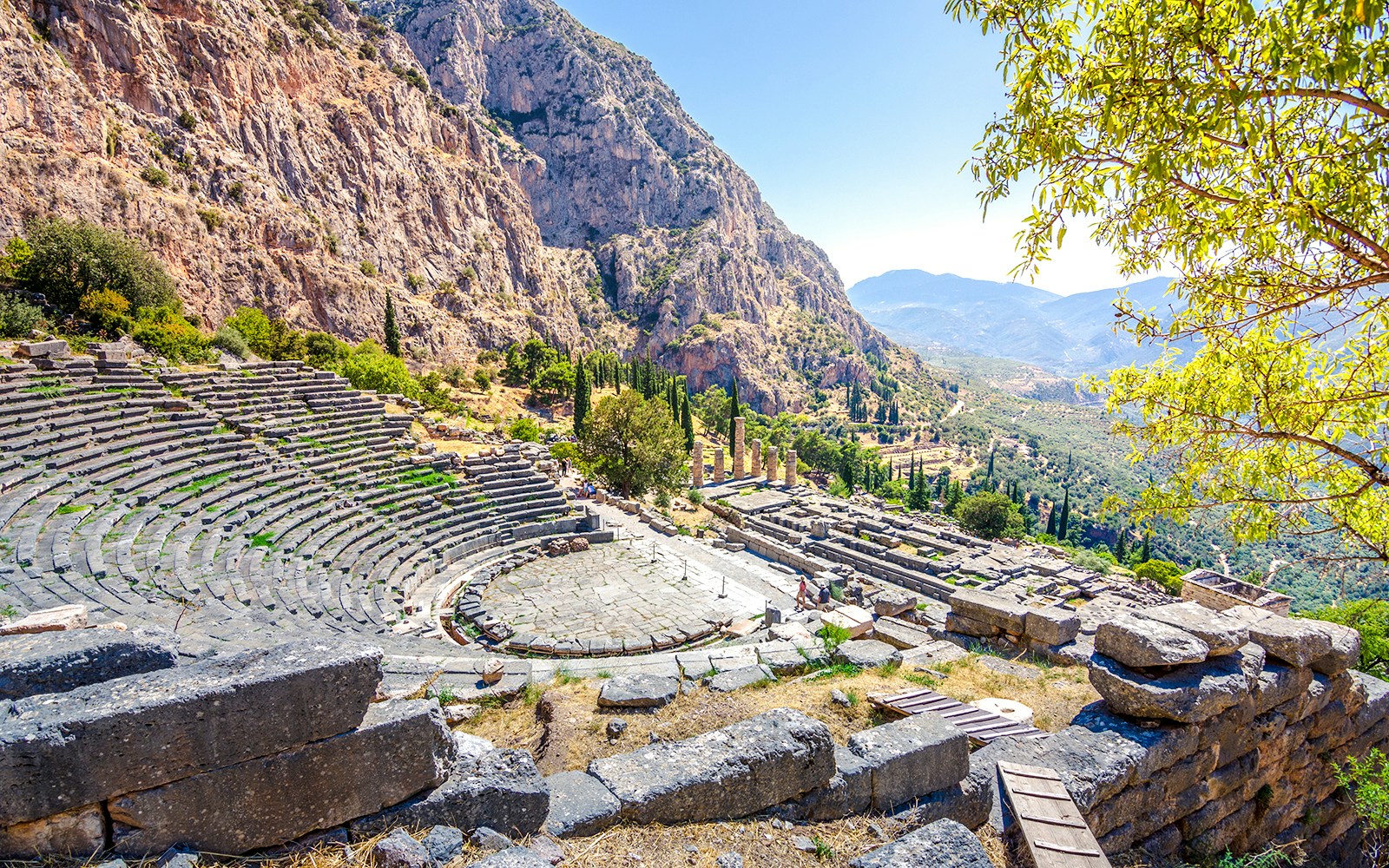
Ancient Stadium of Delphi | A monument to Greek athleticism
Built in the 5th century BCE, the Delphi Stadium was not only the site of the Pythian Games but also a central gathering place for athletic competitions, musical performances, and religious festivals. With a seating capacity for over 7,000 spectators, it reflects the importance of physical prowess and cultural expression in ancient Greek society.
How to access:
Access to the stadium is included with your Delphi tickets, providing entry to both the stadium and the rest of the archaeological site. Whether you choose an audio-guided entry, a self-guided tour, or a full-day guided tour, all options give you access to the stadium and its remarkable ruins.
Quick facts
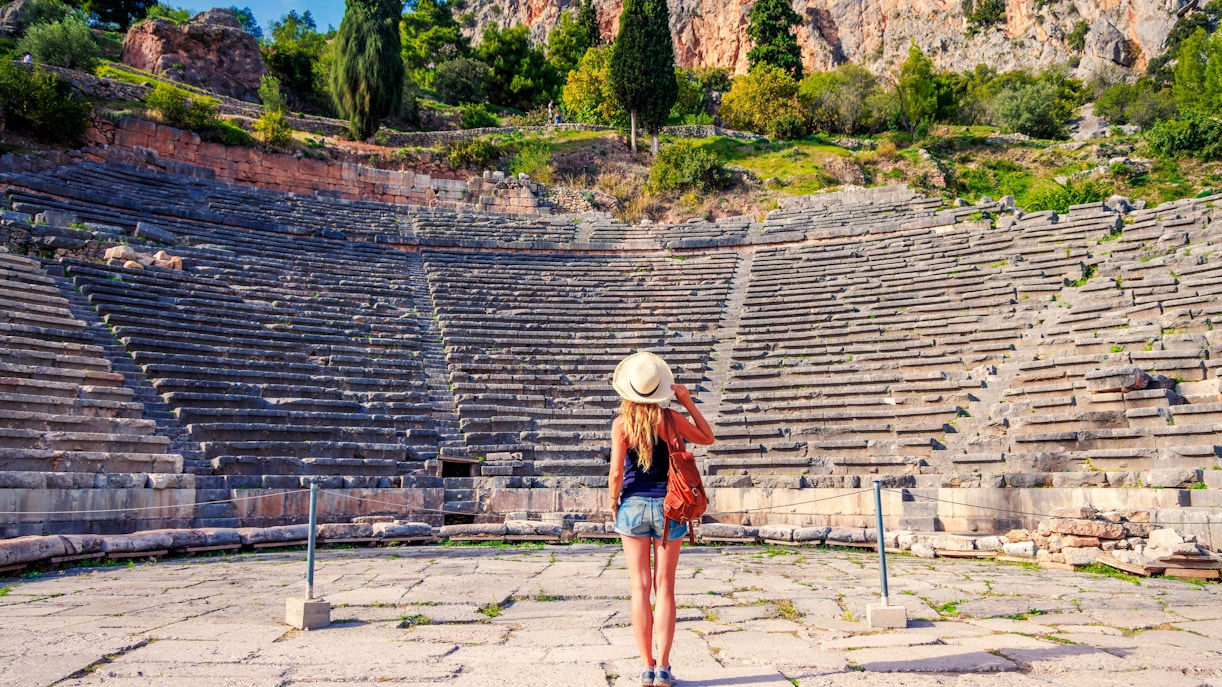
Highlights of the Ancient Stadium of Delphi
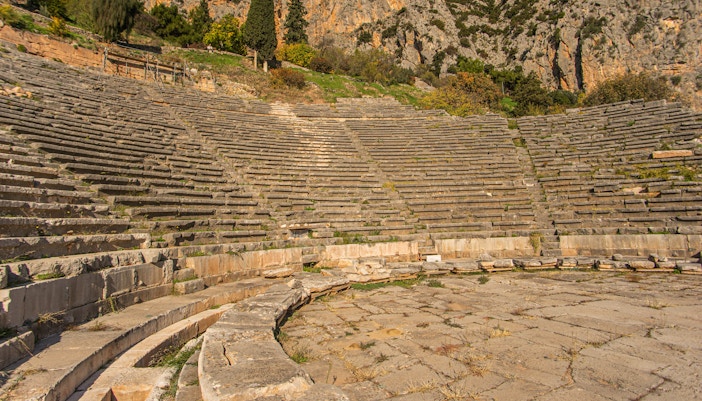
Seating & capacity
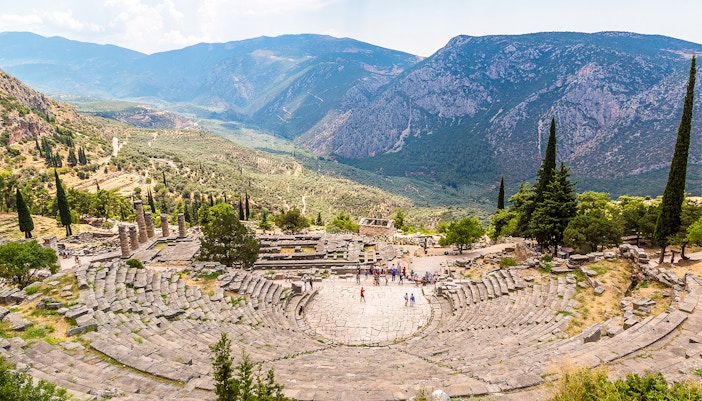
The Ancient Stadium of Delphi was designed to accommodate around 7000 spectators, with seating carved directly into the natural slope of Mount Parnassus. This design not only maximized space but also offered visitors breathtaking views of the surrounding Pleistos Valley.
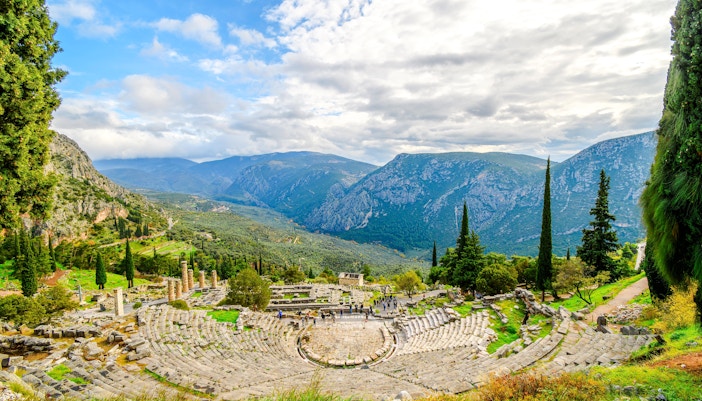
Design & architecture
Measuring 180 meters long and 24 meters wide, the stadium features a well-preserved track that remains visible to this day. Its long, narrow design, coupled with raised seating on either side, gives it the distinctive shape of a classic Greek stadium, optimized for both athletic performance and spectator viewing.
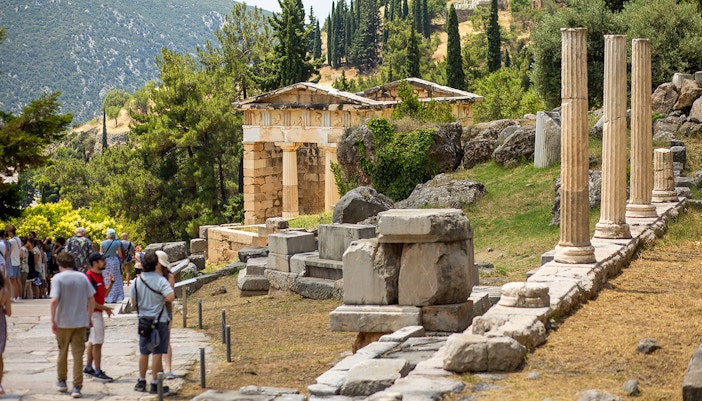
The starting line
The starting line of the track remains intact, offering a tangible connection to the past. As you stand at this historic spot, you can almost feel the excitement and energy that would have filled the air during the Pythian Games, when athletes lined up to compete.
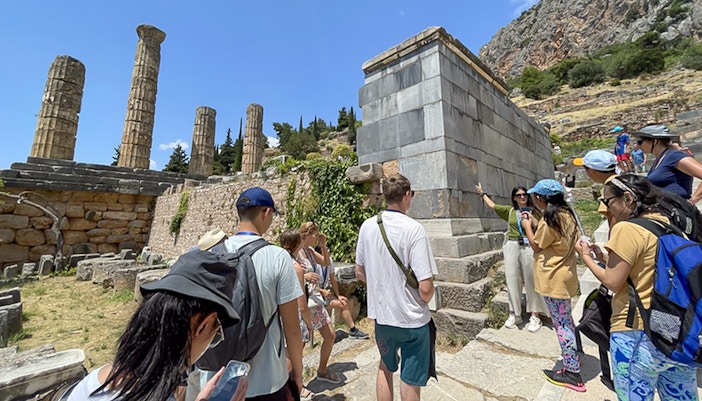
The monumental entrance
The stadium’s entrance is a grand stone structure, though only partial remains are visible today. Despite this, it still offers a glimpse of the monumental scale of the original site, reflecting the impressive nature of the venue that once greeted athletes and spectators alike.
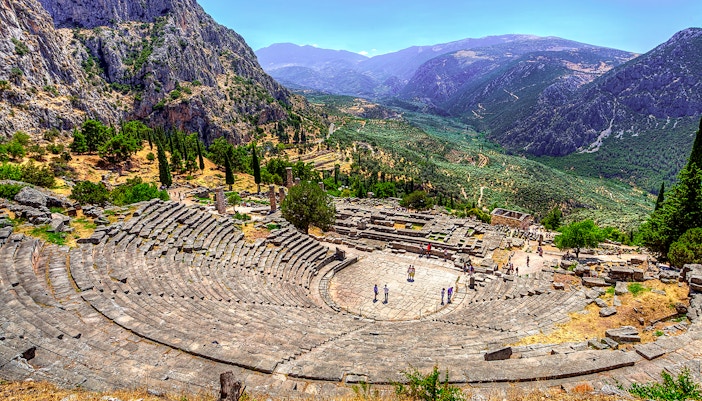
The view
One of the stadium's most captivating features is the stunning view it offers. From the stands, you can gaze out over the expansive Pleistos Valley and the surrounding mountains, experiencing the same breathtaking scenery that ancient spectators would have enjoyed as they watched the athletic events unfold.
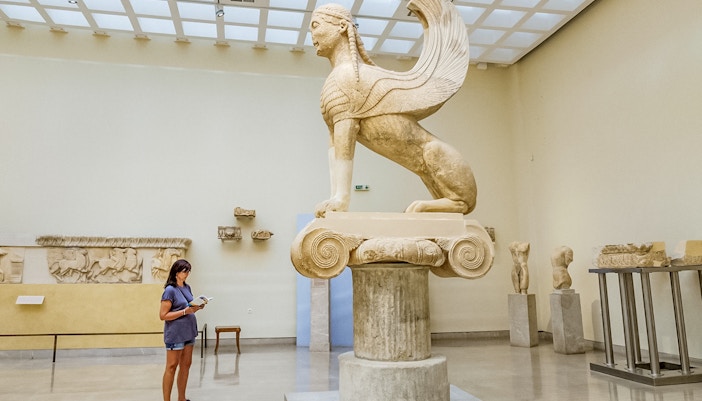
Archaeological discoveries
Archaeologists have uncovered inscriptions, statues, and artifacts near the Stadium, many of which are displayed in the Delphi Archaeological Museum, offering visitors a deeper understanding of the rituals and cultural significance of the Pythian Games.
What were the Pythian Games?
- The Pythian Games were one of four Panhellenic sports tournaments held in Ancient Greece, second in importance only to the Olympic Games. They were held once every four years, two years after the Olympics.
- According to legend, the games were started by Apollo after he killed Python, the serpent that was the guardian of Delphi, and claimed the site for his Oracle.
- The first Pythian Games are believed to have been held in the 6th century BCE, around 582 BCE. They continued to be held up to the 4th century AD.
- The games spanned a week. Since they were held in honor of Apollo, they began with a re-enactment of Apollo slaying Python to celebrate his victory.
- Athletes competed in many sports, including chariot racing, foot races and track events, wrestling, boxing, the pentathlon (long jump, javelin throwing, discus throwing, a foot race, and wrestling), and pankration (a combination of boxing, wrestling, and martial arts).
- Unlike the Olympian Games, women could also compete in the Pythian Games.
Architecture & layout
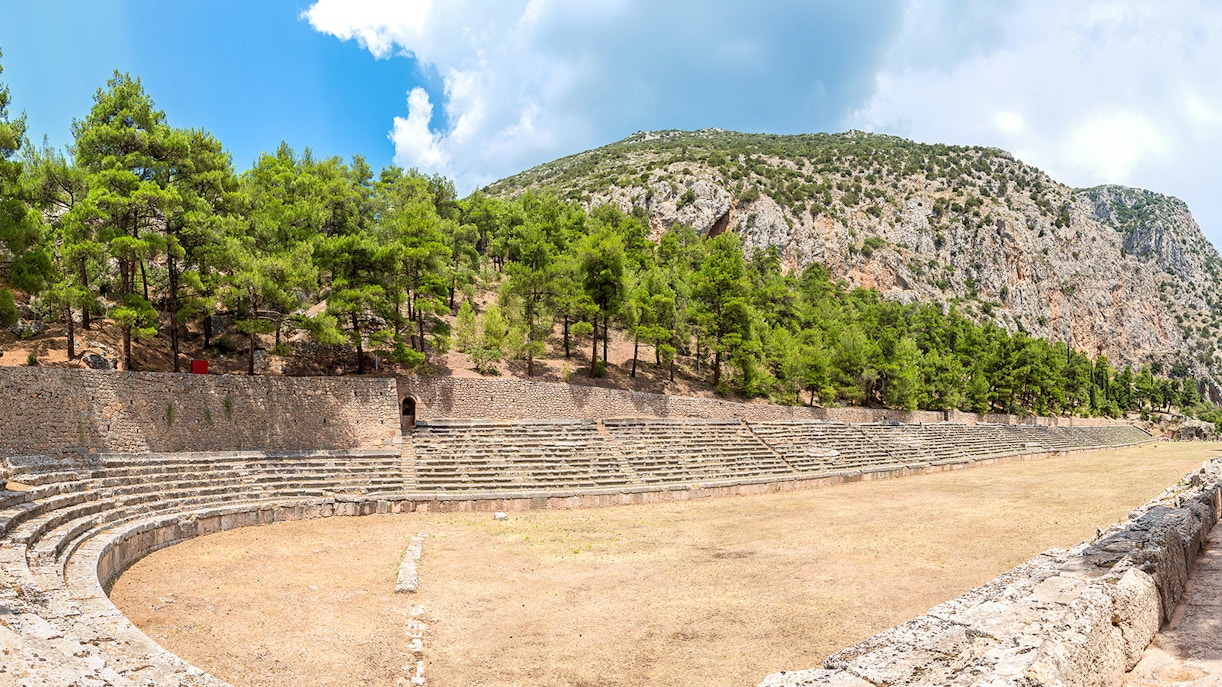
- The Delphi stadium was built in the shape of a long rectangle with hemispherical ends. Its width accommodated tracks for 17 to 20 athletes.
- When it was constructed in the 5th or 4th century BCE, it had earthen seats. There was a designated area for judges, with seats that had backs. The tiered stone seats that you see today were added in the 2nd century AD by Herodes Atticus, a Roman senator.
- Herodes Atticus also added a stone arch above the stadium entrance on the eastern side. Its pillars survived and are still standing today.
- The stadium was built into the slope of the hill. Its long north side was cut into the rocky hillside and had 12 tiers of seats. The southern side was supported by a specially built walled terrace and had six tiers.
- Apart from the stone seats, the stadium’s starting line, made of slabs of paved stone, is almost intact and is its best preserved element.
Frequently asked questions about the Ancient Stadium of Delphi
From April 1 to August 31, the stadium is open from 8am to 8pm. From September 1 to October 31, the timings are reduced by 30 minutes every two weeks to accommodate the shorter daylight hours. From November 1 to March 31, the site is open from 8:30am to 3pm.
To reach the Ancient Stadium of Delphi from the main archaeological site, follow the well-marked path that descends downhill from the Temple of Apollo, passing through the sanctuary’s lower terraces; it’s just a short, scenic walk that takes you through the heart of the ancient site.
Yes, all full-day Delphi guided tours include a visit to the Ancient Stadium, along with access to the rest of the archaeological site, ensuring a comprehensive experience of Delphi’s key landmarks.
The Ancient Stadium is an important archaeological site, and to help preserve it, access to the interior is restricted. However, you can fully view the stadium from the surrounding pathways and the elevated seating areas.
The steep, uphill path and the extended climb leading to the stadium make it difficult for wheelchair access, as the terrain is uneven and not designed for easy navigation. Visitors with mobility challenges may find the route too strenuous.