Quick Information

RECOMMENDED DURATION

5+ hours

VISITORS PER YEAR

600000

NUMBER OF ENTRANCES

3

EXPECTED WAIT TIME - STANDARD

0-30 mins (Peak), 0-30 mins (Off Peak)

EXPECTED WAIT TIME - SKIP THE LINE

0-30 mins (Peak), 0-30 mins (Off Peak)

UNESCO YEAR

1987

Plan your visit

Did you know?

In mythology, Delphi was considered the center or omphalos of the Earth, representing the point where two eagles, sent by Zeus from opposite ends of the world, met. As the myth goes, the wilderness of Delphi was chosen by Apollo as a spot to communicate with mortals. He slayed the evil serpent Python, who guarded Delphi and established a temple and oracle at Delphi.

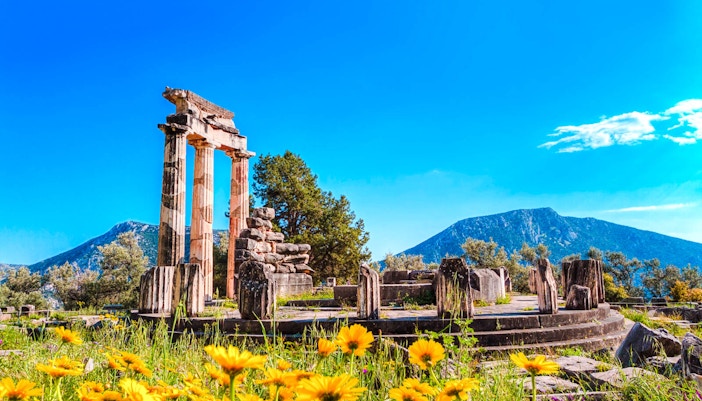
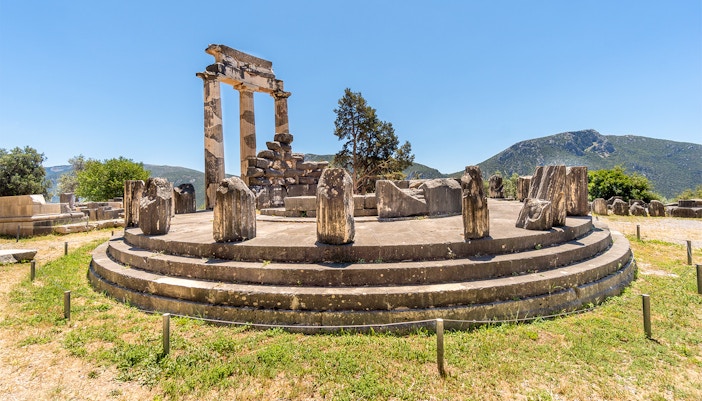
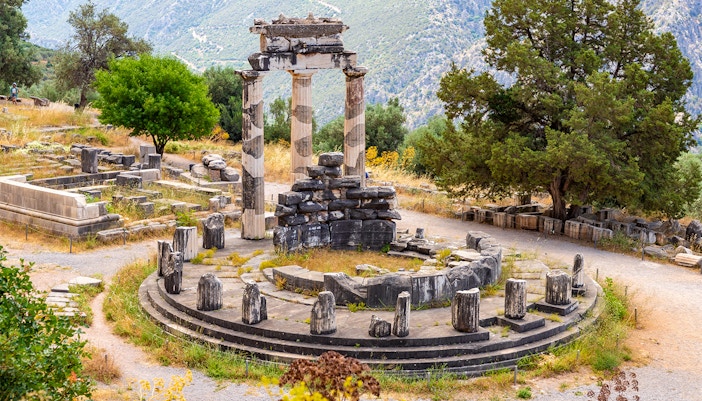
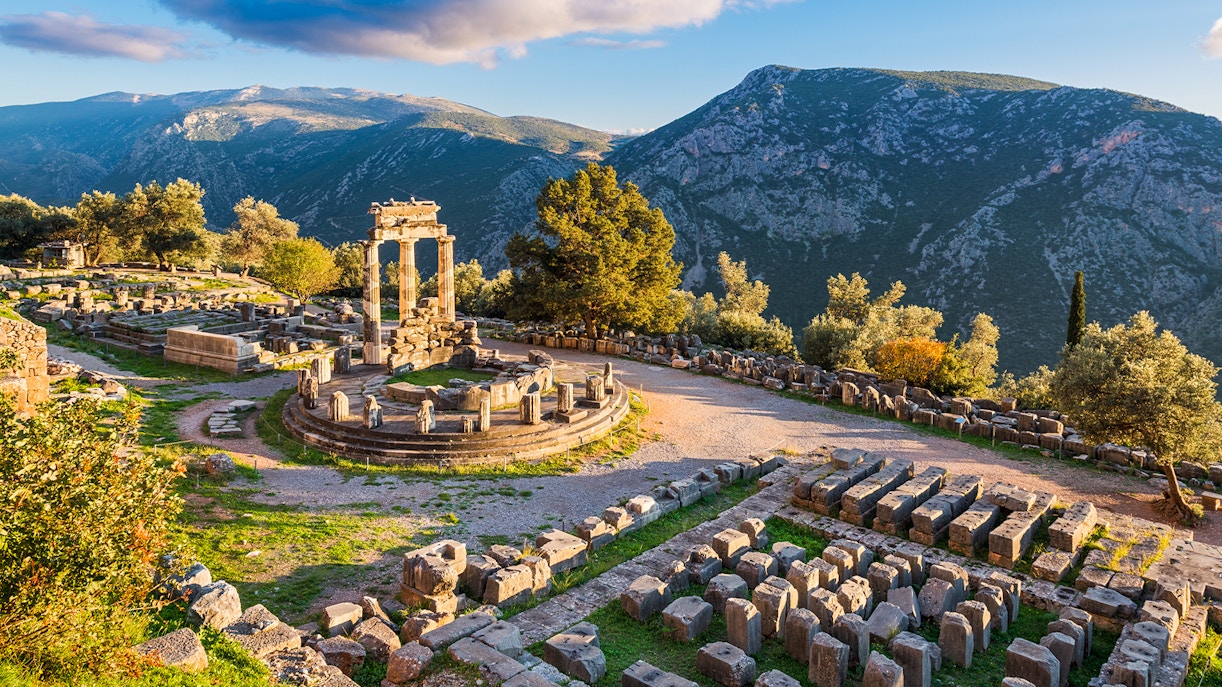
Along with the sanctuary of Apollo, Delphi also has a sanctuary of Athena, which contains the Tholos of Athena Pronaia. The Tholos is a circular building, characterized by its distinctive architecture with a central circular structure and surrounding columns. One of the most photographed spots in Delphi, its purpose remains unknown to this day.

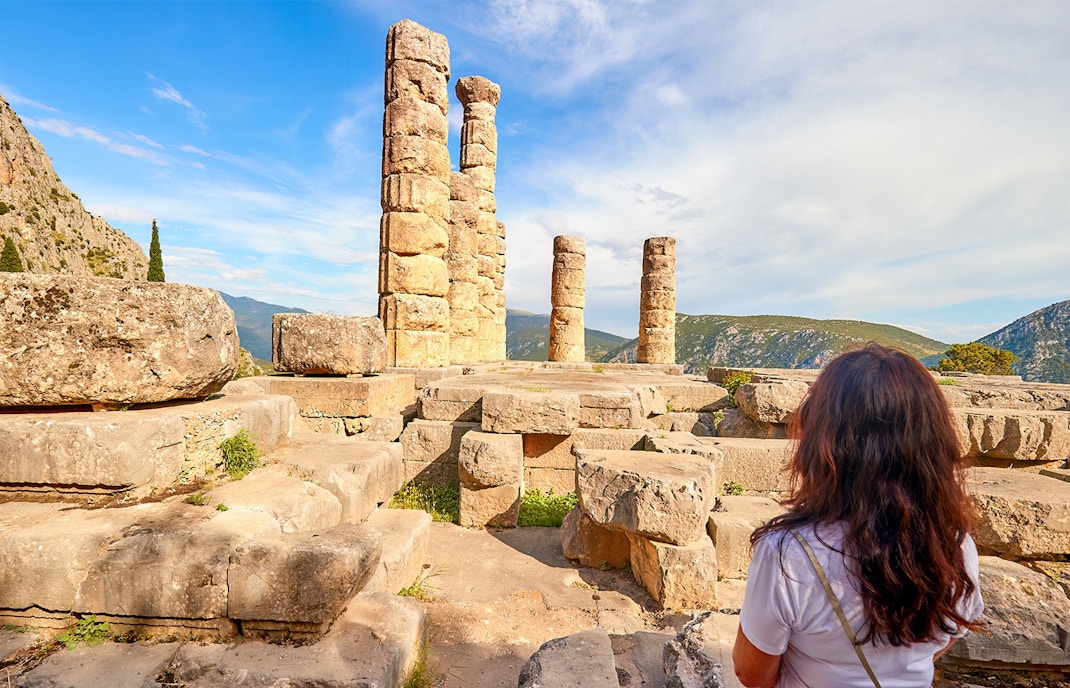
The ancient Temple of Apollo at Delphi was a center for worship. The temple was destroyed and rebuilt multiple times, with the existing ruins dating back to the 4th century BCE. It was the seat of the Oracle of Delphi or Pythia who channelled the god Apollo. It is said that the most important decisions in the Greek world were made upon consultation with the oracle at the Temple of Apollo.

What to see at the Delphi archaeological site
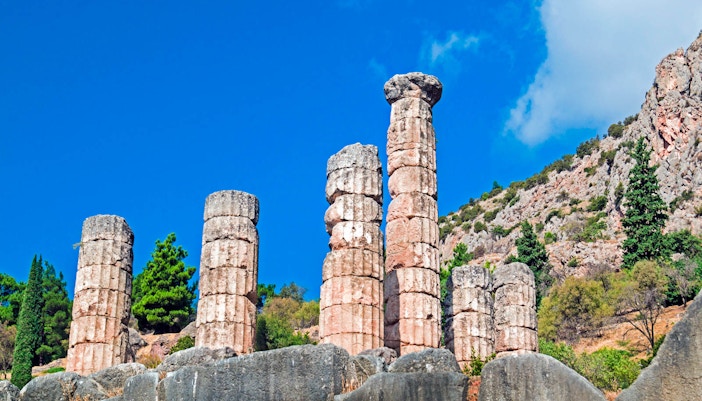
The Temple of Apollo in Delphi

The Temple of Apollo

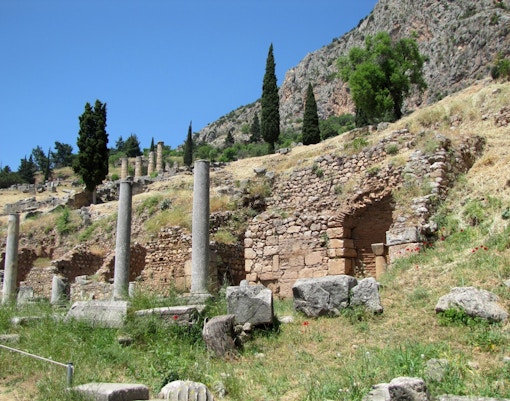
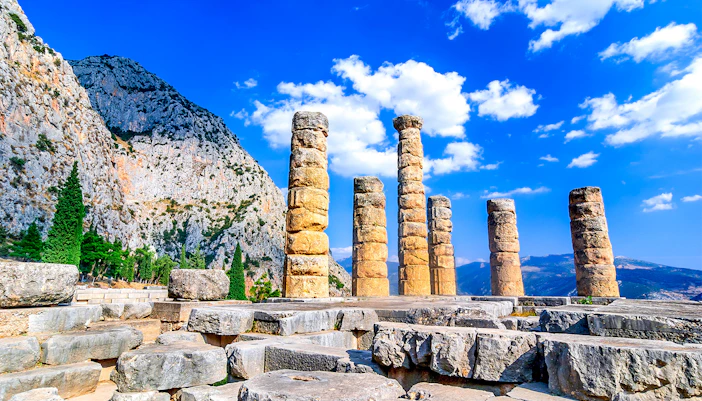
The Temple of Apollo, one of the most significant structures at Delphi, housed the Oracle of Delphi. The first temple dates to the 7th century BCE, with the final reconstruction built around 330 BCE, leaving behind iconic ruins and column remnants.

The Temple of Apollo
Sanctuary of Athena Pronaia in Delphi

Sanctuary of Athena Pronaia

The Sanctuary of Athena Pronaia, located southeast of the main Delphi site, served as a precursor to the Sanctuary of Apollo. Its standout feature is the Tholos, a circular structure with 20 Doric columns, three of which still stand today.

Sanctuary of Athena Pronaia
Theater of Delphi

Theater of Delphi

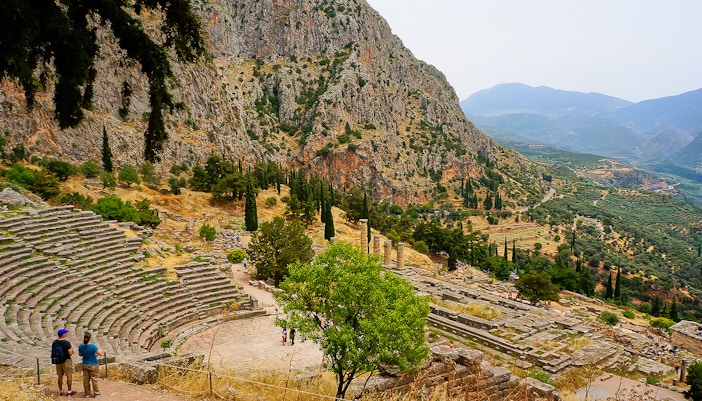
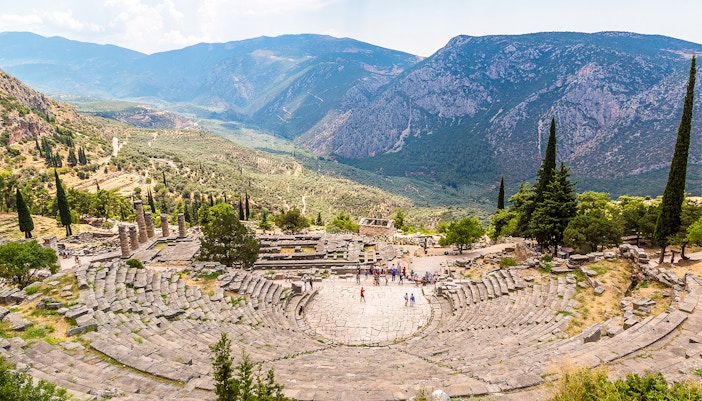
The Theatre of Delphi, built in the 4th century BCE, sits on a mountain slope above the Temple of Apollo. With a capacity of 5,000, it hosted music, drama, and poetry during festivals and the Pythian Games. The view from the theater offers a stunning perspective of the entire archaeological site.

Theater of Delphi
Ancient stadium of Delphi

Ancient Stadium

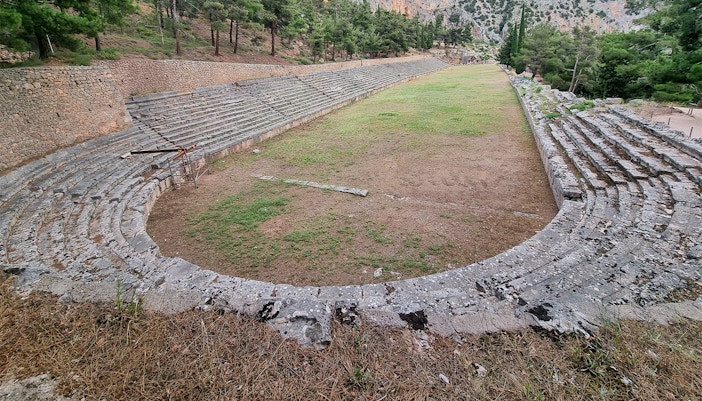
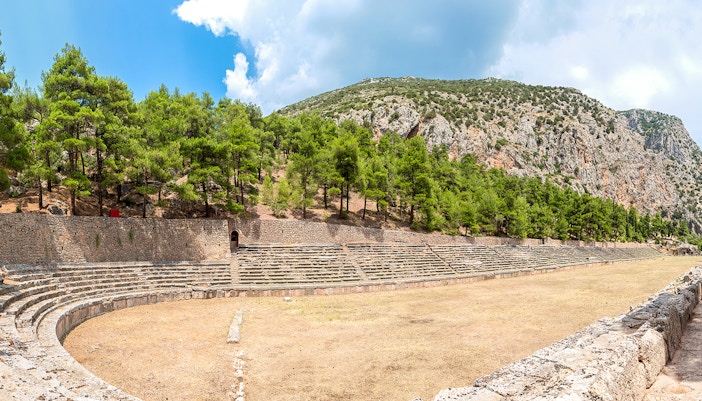
Higher up the mountain, the ancient stadium of Delphi, built in the 3rd century BCE, could hold 6500 to 7000 spectators. It hosted the Pythian Games and other Hellenic festivals. Remarkably well-preserved, its starting line and arched entrance still stand, offering views of the sanctuary and valley below.

Ancient Stadium of Delphi
Delphi Archaeological Museum

Delphi Archaeological Museum

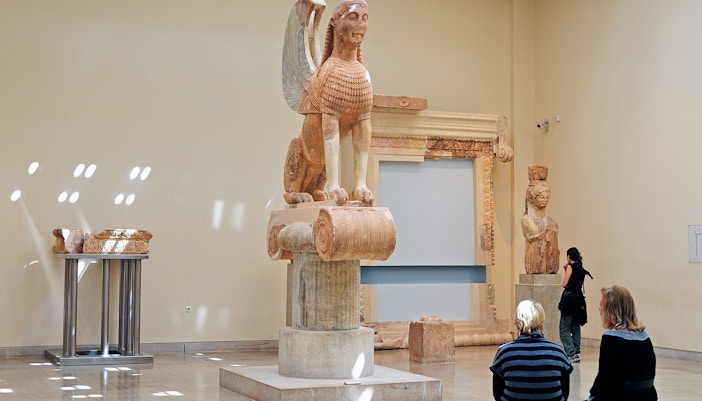
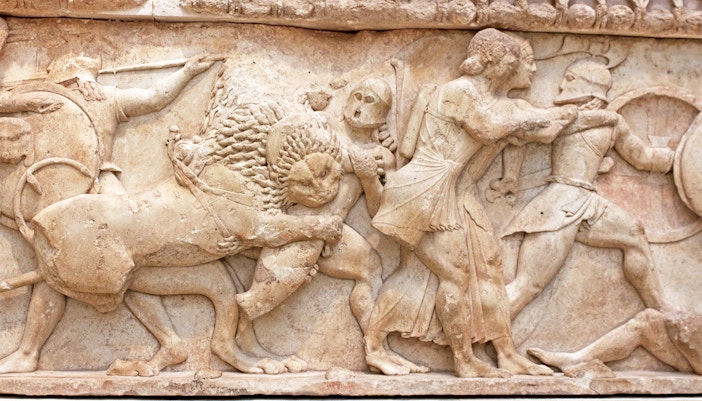
The Delphi Archaeological Museum, established in 1903, displays artifacts from the Mycenaean to the late Byzantine period. Highlights include the chryselephantine idols of Artemis and Apollo, and the famous Charioteer of Delphi, showcasing the deep connection between art, architecture, and religion in ancient Greece.

Delphi Archaeological Museum
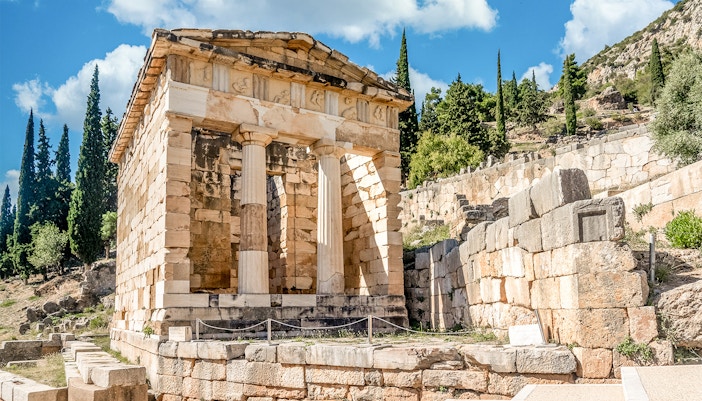
Athenian Treasury at Delphi Archaeological Site with stone columns and ancient ruins.

The Athenian Treasury

The Athenian Treasury, built around 490 BCE on the Sacred Way, commemorates Athens' victory at the Battle of Marathon. Made of Parian marble, its temple-like structure features sculptural friezes depicting Greek myths, including the labors of Hercules and the heroism of Theseus.

The Athenian Treasury
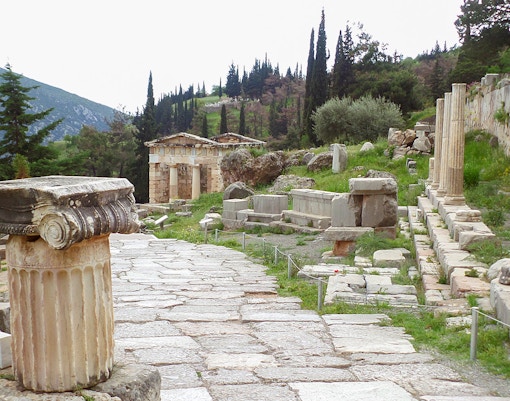
Ancient ruins along the Sacred Way at Delphi Archaeological Site, Greece.

The Sacred Way

The Sacred Way, the path leading to the Temple of Apollo, is lined with the remains of treasuries built by city-states to offer thanks for the Oracle’s wisdom. As you walk up the Sacred Way, you’ll be treated to gorgeous views of Mount Parnassus and the valley below.

Omphalos in Delphi

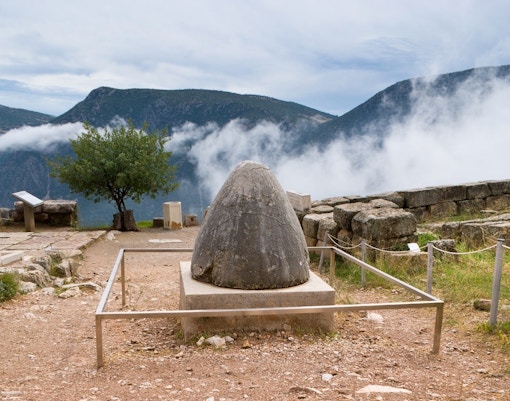
Omphalos

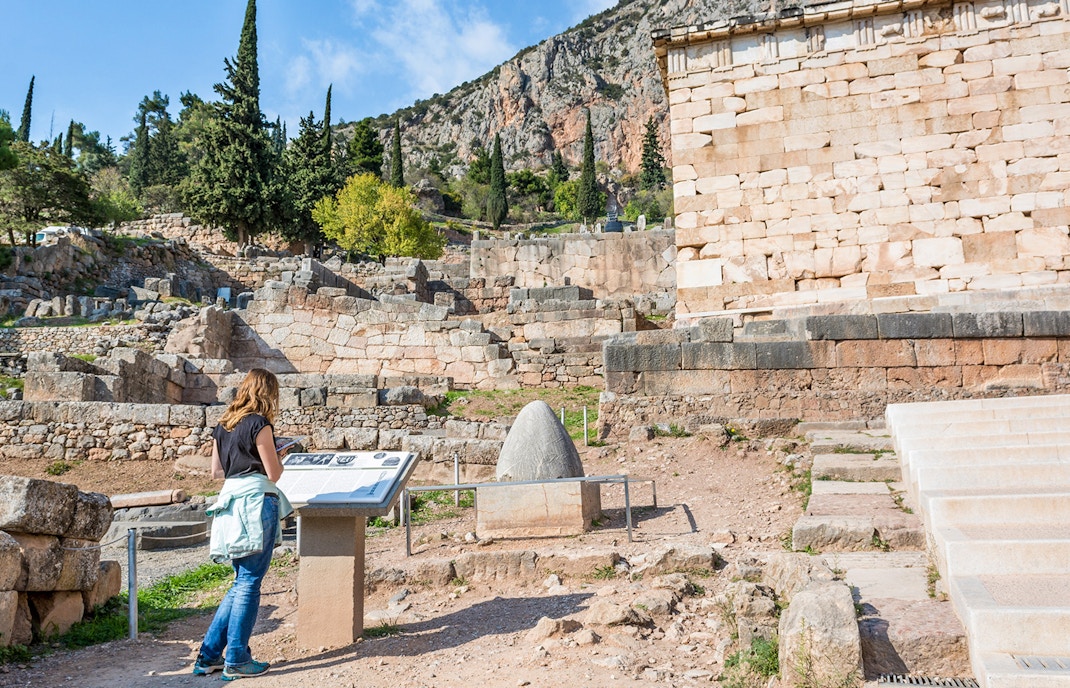
The Omphalos, a marble stone at Delphi, was considered the 'navel of the Earth', marking the center of the universe according to ancient Greek belief. Zeus is said to have dropped it here, and while the original is housed in the Delphi Archaeological Museum, the one at the site is a replica.

Castilian Spring in Delphi

Castilian Spring

The Castalian Spring, located east of the Delphi site, was a sacred place where visitors, including pilgrims and Pythian game contestants, washed before heading to the Temple of Apollo. It’s believed that Pythia and the priests also purified themselves here before delivering prophecies.

Polygonal Wall in Delphi

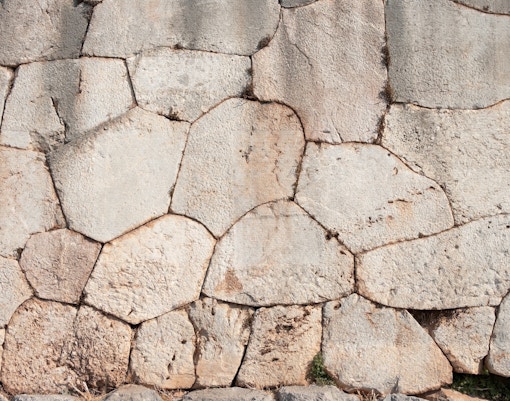
Polygonal Wall

During its second construction in the 6th century BCE, the Temple of Apollo was supported by the Polygonal Wall, made of interlocking stones with curved, polygonal shapes. This 90-meter-long wall, located in front of the Stoa of the Athenians, features inscriptions that mark the release of slaves.

A brief history of Delphi

  • 1500 to 1100 BCE: A small Mycenaean settlement occupies the slopes of Mount Parnassus, where early worship of local earth deities takes place. Delphi begins as a sanctuary dedicated to Gaia, the Earth Mother.
  • 1100 to 800 BCE: As Greek religion evolves, the site transforms into a shrine devoted to Apollo. The myth of Apollo slaying the serpent Python is born, establishing Delphi as the god’s sacred domain.
  • 800 to 600 BCE: The Pythia, Apollo’s high priestess, begins delivering divine prophecies while in a trance, attracting pilgrims from across Greece.
  • 600 to 480 BCE: City-states like Athens, Corinth, and Sparta build treasuries along the Sacred Way to display offerings. The first Temple of Apollo is constructed, later destroyed by fire in 548 BCE.
  • 510 to 480 BCE: The Athenians rebuild their treasury using Parian marble to commemorate their victories over Persia, symbolizing both civic pride and divine favor.
  • 480 to 330 BCE: Delphi flourishes as Greece’s spiritual capital. The second Temple of Apollo is constructed in Doric style, and the Pythian Games rival the Olympics in prestige, celebrating art, music, and athleticism.
  • 330 to 190 BCE: New monuments, including the Stoa of the Athenians and the Polygonal Wall, are built, reflecting Delphi’s lasting influence on Greek culture.
  • 190 to 146 BCE: Rome acknowledges Delphi’s sanctity. Wealthy patrons, including Emperor Hadrian, fund restorations, ensuring the continued operation of the oracle under Roman rule.
  • 2nd to 4th century CE: As Christianity spreads, pagan rituals gradually fade. The last recorded prophecy occurs around 393 CE, when Emperor Theodosius bans ancient cults and closes the sanctuary.
  • 6th to 15th century CE: The site falls into ruin, partly buried by landslides. The nearby village of Kastri develops atop the ancient foundations, repurposing temple stones for homes and churches.
  • 1892 to 1903: The ‘Great Excavation’ by the French Archaeological School relocates Kastri and uncovers Delphi’s monumental remains, including the Temple of Apollo, the Treasury, and thousands of inscriptions.
  • 20th to 21st century: Delphi becomes a UNESCO World Heritage Site in 1987. Ongoing archaeological work preserves its monuments, attracting scholars and travelers eager to connect with its rich mythic and historical legacy.

Delphi's religious importance in ancient Greece >

Myths of Apollo & the rise of ancient Greek culture

“Navel of the Earth” & Omphalos

'Navel of the Earth' & Omphalos

In Greek mythology, Zeus sent two eagles from opposite ends of the universe. They crossed above Delphi, and Zeus dropped the Omphalos stone to mark it as the center, or 'navel of the Earth'.

Why did Apollo choose Delphi?

Why Apollo picked Delphi

In Greek mythology, Apollo chose Delphi for its beauty and defeated the serpent Pytho to claim it. The sanctuary was built by Cretan priests, led by Apollo in the form of a dolphin, giving Delphi its name.

Pythia & the Oracle of Delphi

Pythia & the Oracle of Delphi

The ancient Greeks believed Gods spoke through oracles, with the Oracle of Delphi being the most important. Pythia, the high priestess of Apollo’s temple, delivered Apollo’s messages, advising on matters from state affairs to farming and war.

How the prophecies were delivered

How the prophecies were delivered

Pilgrims seeking guidance from the Oracle of Delphi first purified themselves in the Castalian Spring. Pythia, the high priestess, sat on a three-legged stool in the Temple of Apollo, inhaling vapors from a chasm that induced a trance. In this state, she uttered Apollo’s prophecies, which were then interpreted by priests for the petitioner.

Interpreting the prophecies

Interpreting the prophecies

The Oracle’s prophecies were often vague, ambiguous, and delivered in riddles. In 560 BCE, King Croesus of Lydia consulted both Delphi and Thebes, receiving the prophecy that attacking the Medes (Persians) would destroy a great empire. Interpreting this as a victory, he went to war, only to be defeated, and the Lydian Empire was destroyed.

Who built Delphi?

The earliest structures at the Delphi archaeological site date back around 2,500 years, with the builders' identities lost to time. The first Temple of Apollo is traditionally attributed to the architects Trophonius and Agamedes, who are famous in Greek mythology. The second temple is credited to the wealthy Alcmaeonidae family, while the third temple, whose ruins remain today, was constructed by the Corinthian architect Spintharus, along with Xenodoros and Agathon.
The Sanctuary of Athena Pronaia is also believed to have been built by the Alcmaeonidae family, and the Tholos of Delphi is attributed to the architect Theodorus of Phocaea.

The various treasuries along the Sacred Way were built by different city-states, including Athens, Siphnos, Thebes, Boeotia, Sicyon, and Acanthus. Additionally, the Athenians constructed the Stoa of the Athenians in the 5th century BCE.

Architecture of Delphi

https://cdn-imgix.headout.com/media/images/87d7aa6adbd858996367bba7766c35bb-Athens-0004-AdobeStock-236666136.jpg

The Delphi archaeological site features a mix of Doric, Ionic, and Corinthian architecture, showcasing the evolution of Greek styles from the Archaic to Classical and Hellenistic periods. The Temple of Apollo, built in the 4th century BCE, is a Doric structure with six columns on the facade and 15 along the sides. The Tholos at the Sanctuary of Athena Pronaia, a marble circular building, has 20 Doric columns, with three still standing, and Corinthian columns inside.

The treasuries, built in the Archaic or Doric styles, resemble small temples and are adorned with sculptures and friezes depicting mythological and historical events. The theatre is a fine example of Hellenistic architecture, blending with the natural landscape. Many structures, including the stadium and theatre, were later renovated by the Romans, such as the addition of stone seats in the stadium.

Delphi today

Delphi was designated a UNESCO World Heritage site in 1987. Today, it is one of Greece’s most iconic ancient landmarks and an important archaeological site. Due to the crucial role it played in politics, religion, and everyday life in ancient Greece, its cultural significance has endured over the centuries.

Together with the Delphi Archaeological Museum, it draws thousands of visitors from around the world, who come to see its historical ruins and get a sense of the grandeur of ancient Greek architecture.

Frequently asked questions about the Delphi archaeological site

Do I need tickets to visit the Delphi archaeological site?

Yes, you can book Delphi tickets to visit the archaeological site and the museum. We recommend choosing a full-day guided tour of Delphi from Athens to enjoy round-trip transfers and priority access.

What type of attractions can I see at Delphi?

The historical site at Delphi contains the ruins of the Ancient Greek sanctuary of Apollo. Here, you’ll find ruins of ancient temples from the 8th century BCE to the 4th century AD, including the Temple of Apollo, the Sanctuary of Athena Pronaia, an ancient stadium and theater, and various treasuries.

How much time should I allocate for a visit?

It typically takes about 4 to 5 hours to explore the archaeological site and the museum. However, Delphi is located around two and a half hours from Athens, so if you visit it on a day trip, you’d require a full day.

What are Delphi's opening hours?

The Delphi archaeological site and Museum are open from 8am to 8pm from April through August. In September and October, the site’s opening hours are reduced by half an hour every two weeks with the shortening daylight hours. From November to March, they are open from 8.30am to 3.30pm.

Is Delphi wheelchair accessible?

The Delphi Archaeological Site is not wheelchair accessible due to steep slopes, uneven stone paths, and many stairs. However, the Archaeological Museum of Delphi is fully accessible to wheelchair users.

More reads

Athens to Delphi day trips

Delphi day tours from Athens

Ancient Stadium of Delphi

Ancient Stadium of Delphi

Theater of Delphi

Theater of Delphi