Once believed to be the “navel of the earth,” Delphi was the spiritual heart of ancient Greece. From 6th to 4th century BC, kings and warriors traveled here to seek the Oracle’s guidance before major decisions.
.svg?auto=format&w=156&h=48&q=90&crop=faces&fit=crop)
Most people come to Delphi for the famed Oracle and Temple of Apollo, but there’s so much more to see if you know where to look. Whether you're here on a day tour from Athens or staying overnight, Delphi rewards curious travelers. From mountain-framed views to hidden sanctuaries and scenic walking paths, the experience goes well beyond the postcard views. If you're looking to uncover the underrated side of mainland Greece, here are the best things to do in Delphi that will truly enrich your visit.
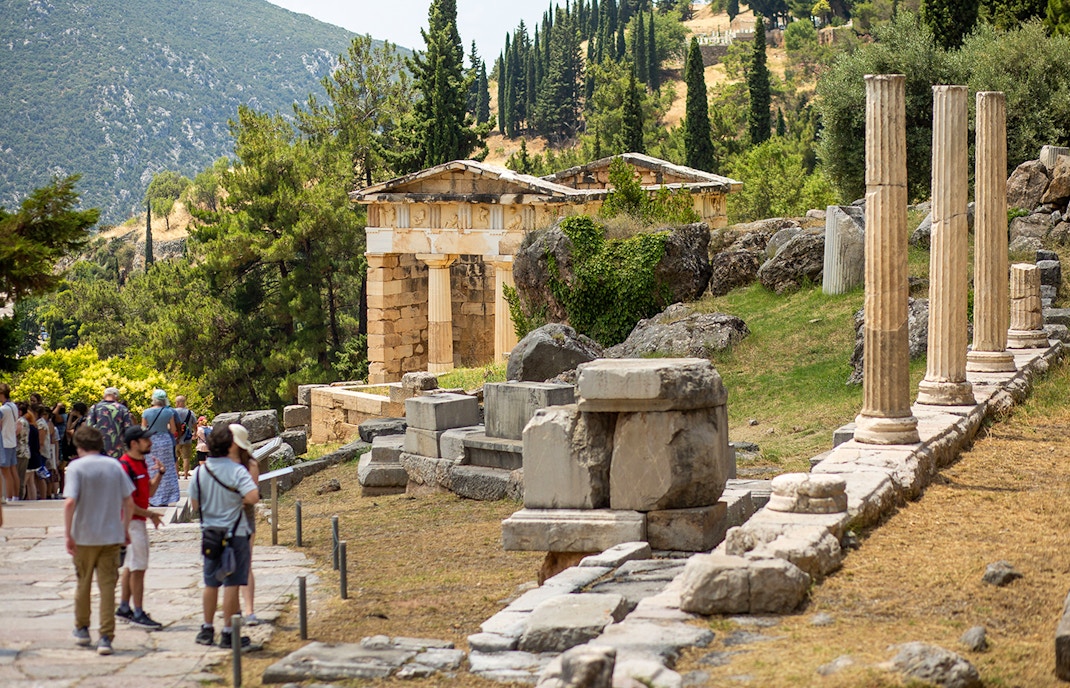
Once believed to be the “navel of the earth,” Delphi was the spiritual heart of ancient Greece. From 6th to 4th century BC, kings and warriors traveled here to seek the Oracle’s guidance before major decisions.
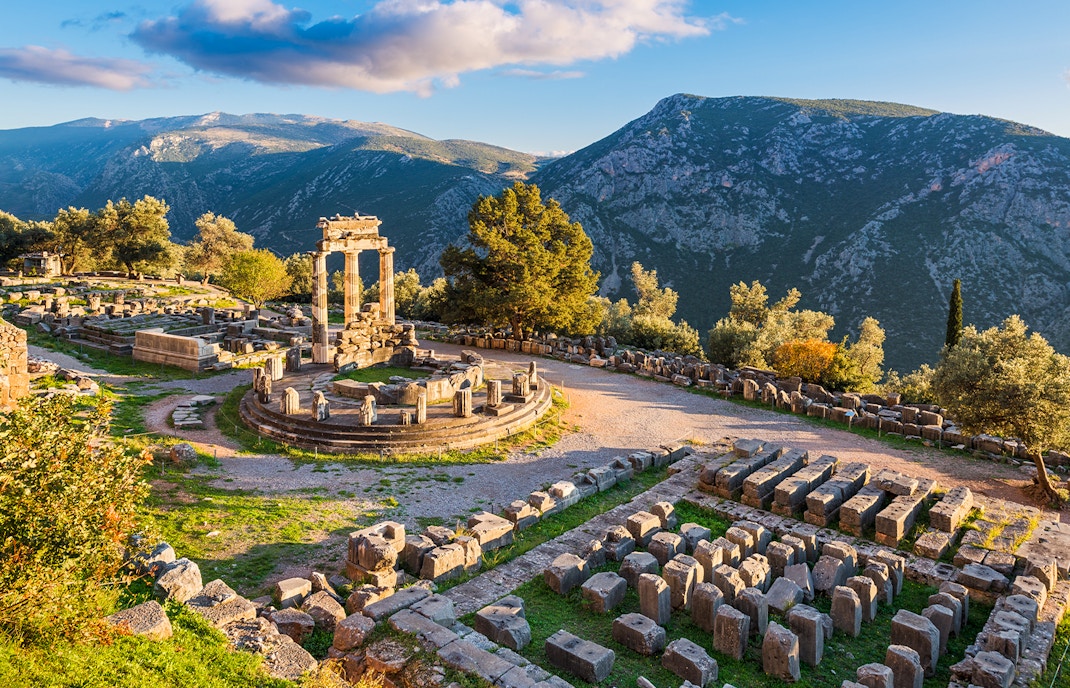
Delphi is located on the slopes of Mount Parnassus. From here, you'll get sweeping views of the Pleistos Valley blanketed in centuries-old olive groves. You’ll find ancient ruins against a backdrop of rugged peaks and blue skies.
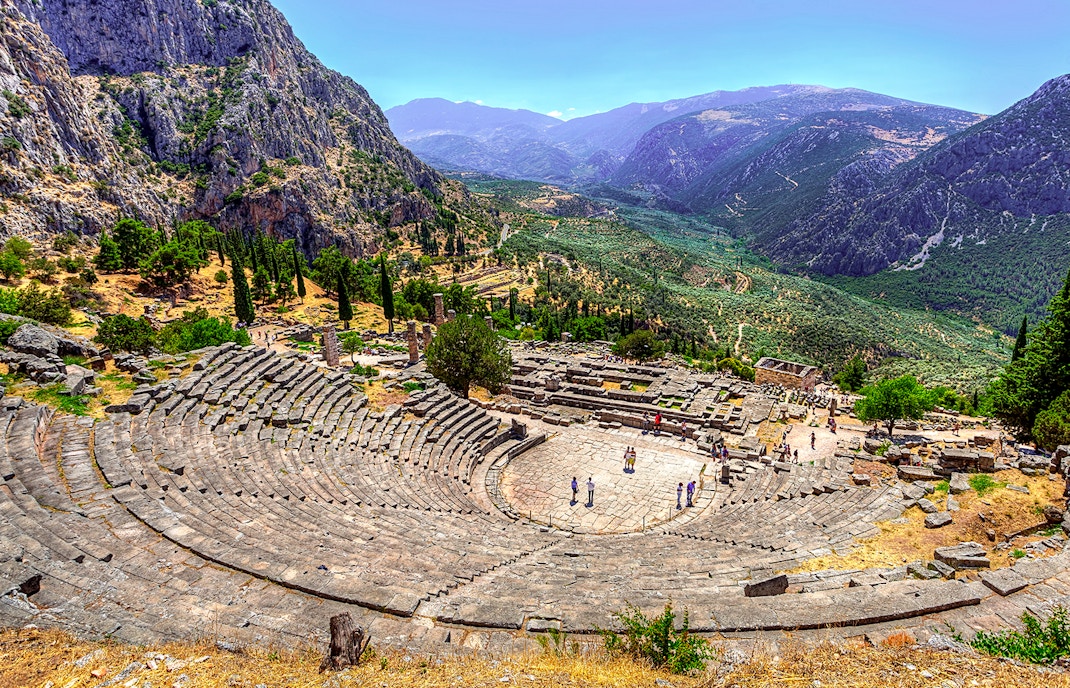
With its preserved temples, theater, stadium, and museum, Delphi is one of Greece’s most captivating archaeological sites. Give yourself at least half a day to truly take in both the ruins and the nearby town.
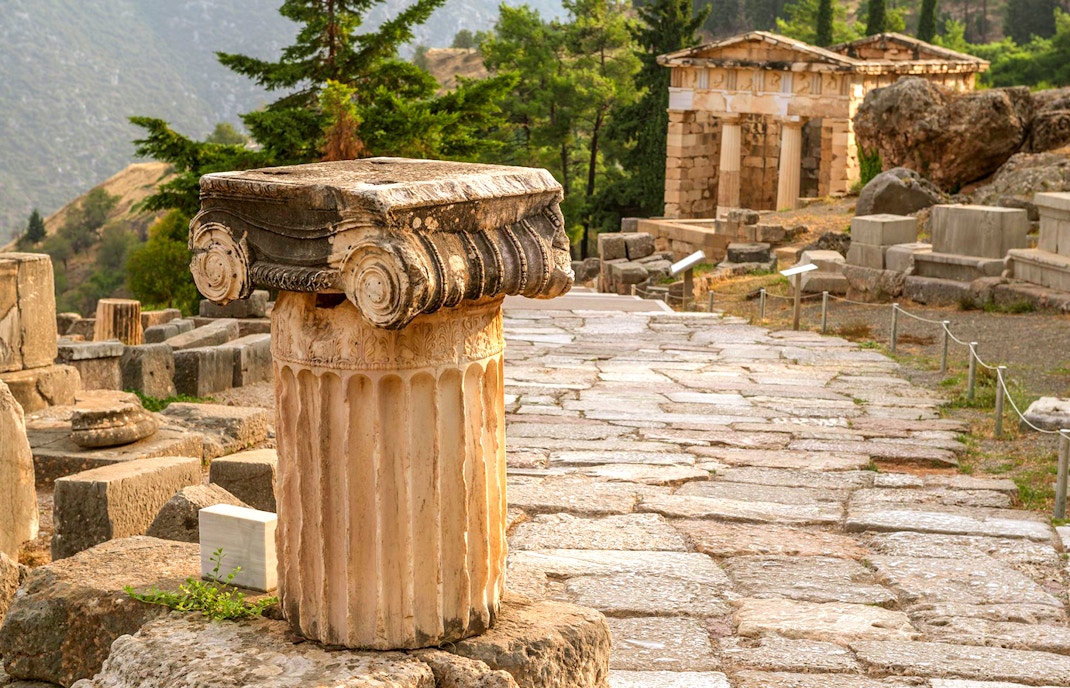
Every ruin here tells a story of Apollo, Athena, and the mysterious Pythia. Delphi isn’t just a site; it’s a gateway into Greece’s most fascinating legends, all set in one remarkably walkable complex.
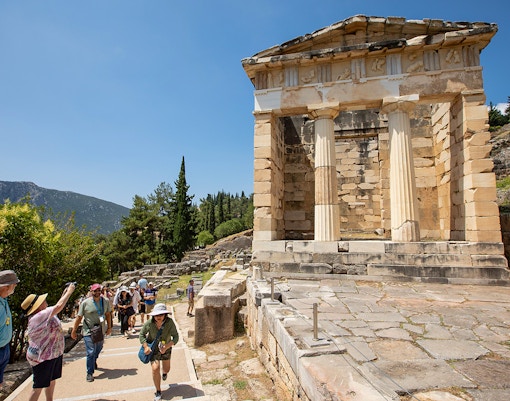
This is the heart of ancient Delphi. Standing among its weathered columns, you’ll walk where the Oracle once spoke for Apollo himself. The temple ruins sit dramatically on a slope with valley views behind them.
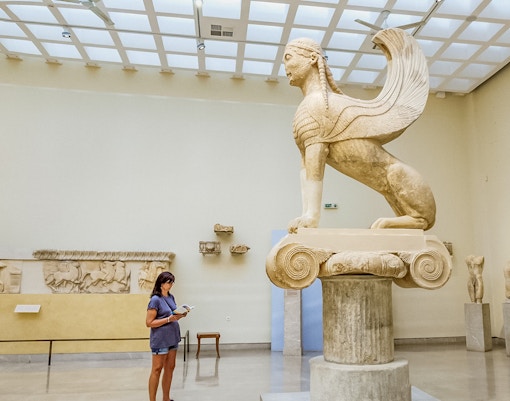
Just a short stroll from the ruins, the Delph Archaeological museum houses the treasures once offered to Apollo like the majestic Sphinx of Naxos and the bronze Charioteer of Delphi, one of ancient Greece’s finest surviving sculptures. You’ll also see carved friezes, the omphalos stone (thought to mark the world’s center), and temple relics that tie the site’s history together beautifully.
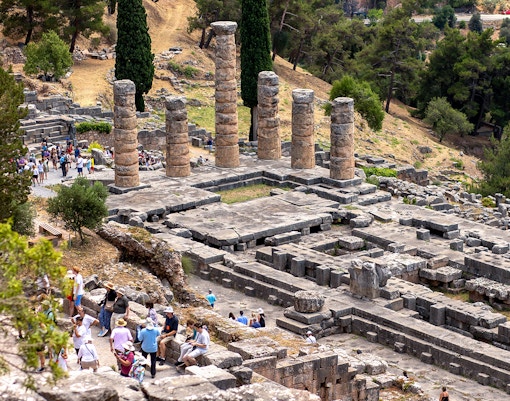
This stone path winds uphill through the sanctuary, once walked by pilgrims seeking the Oracle’s advice. You'll pass by the remains of treasuries, monuments, and votive statues, left by powerful city-states like Athens and Sparta. The climb is gentle but steady and every few steps you’ll get a new perspective over the ruins and valley.
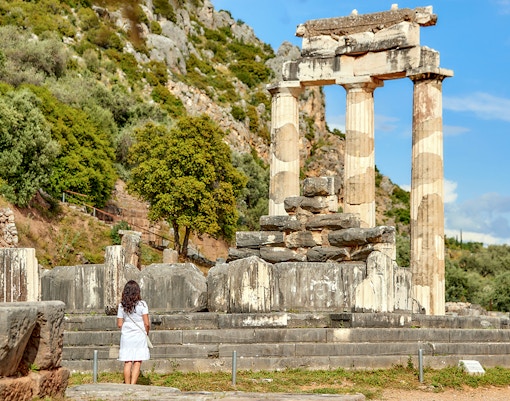
A few minutes downhill from the main site, this circular ruin is one of the most photographed in Delphi. The Tholos once marked the Sanctuary of Athena and likely served a ceremonial role, though its purpose remains a mystery.
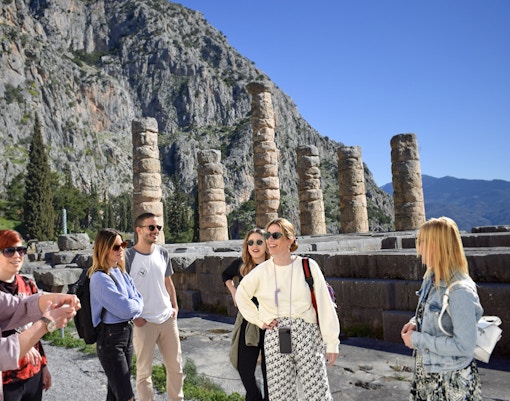
Above the temple lies the ancient theatre, cut into the mountain and offering one of the best panoramic views in Greece. Higher still, the stadium hosted athletic events for the Pythian Games. Both are incredibly well preserved and walkable.

The charm of modern Delphi lies in its simplicity. One main street threads through the town, lined with family-run tavernas, boutique hotels, and shops selling handmade olive oil soaps, honey, and ceramics. Stop for lunch on a shaded terrace with a view. Try grilled lamb, mountain greens, and house wine.
Read more about restaurants in Delphi.
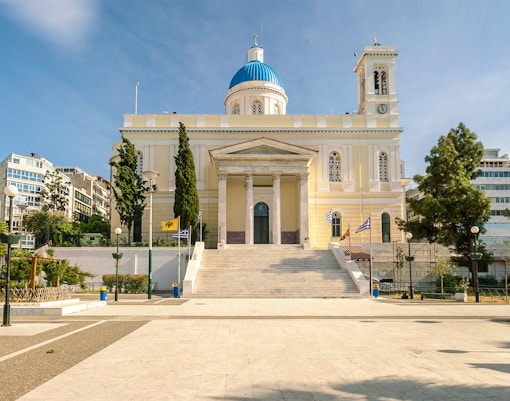
Just a few minutes from town, you’ll find quiet, centuries-old churches like the Church of Agios Nikolaos and the Monastery of Prophet Elias. These places offer a more spiritual, everyday kind of Greek heritage from faded frescoes to incense.

Nearby Arachova has a small folklore museum that shows local life through costumes, tools, and crafts. Visit this for understanding the region's rural identity. For deeper mythology or landscape context, consider a stop at the Amphiklia Cultural Center or even the Hosios Loukas Monastery Museum (a short drive away).
Arrive early for light & space: Get to the archaeological site by 9am i.e., before tour buses arrive. You’ll skip the crowds and catch stunning soft light over the ruins and valley for your best photos of the day.
Visit the museum after the site: Go through the ruins first while it's cool and quiet. Then hit the museum to deepen your understanding with real artifacts from the places you just walked through.
Wear walking shoes: The ancient stones and paths are uneven, sloped, and slippery in parts especially the Sacred Way and theatre stairs. Avoid sandals; bring proper sneakers or hiking shoes with grip.
Don't miss the Tholos. Walk to it, don’t drive: It’s a short 10-minute downhill walk from the main site, but many skip it. Walking gives you the best views and avoids awkward parking at the lower entrance.
Check ticket combos and free Days: Entry to the site + museum is around €12, but it’s free on the first Sunday of the month (Nov–March). EU students also get in free if they bring ID.
Skip midday dining in town: Popular tavernas fill fast around 1–2pm. For a quieter meal, eat early or grab coffee/snacks, then enjoy a scenic lunch in Arachova (15 minutes away) after your visit.
Yes, a single day is enough to explore the main archaeological site, museum, and Tholos. Just make sure you arrive early. But staying overnight gives you quieter access to the ruins, sunset views, and time to enjoy Delphi town without the daytime rush.
Absolutely. The Tholos of Athena Pronaia is just a 10-minute downhill walk from the main archaeological site. The path is easy to follow and offers gorgeous views of the valley along the way. It’s a must-visit spot that many visitors miss.
Yes, Delphi town is just a few minutes from the archaeological entrance and has several cozy tavernas, cafés, and bakeries. You’ll find traditional Greek meals, vegetarian options, and scenic terraces perfect for a relaxed post-ruins lunch.
Plan for about 1.5 to 2 hours to explore the full site at a comfortable pace. That includes time to walk the Sacred Way, visit the Temple of Apollo, climb to the theatre and stadium, and enjoy the views along the way.
Early morning is ideal. You’ll get cooler temperatures, better lighting for photos, and fewer tour groups around. If you’re staying overnight, late afternoon also offers a peaceful atmosphere and golden-hour views across the valley.
Yes, tickets can be purchased directly at the entrance to the archaeological site. You can also book them online in advance, which is helpful during high season or if you want to bundle with a guided tour.
While the museum is mostly accessible, the archaeological site has steep paths and uneven stone steps that can be challenging. There are no lifts or smooth walkways through the ruins, so mobility support is limited.
From Athens: Day Trip to Delphi Site & Museum
Delphi Archaeological Site & Museum Tickets with Audio Guide
From Athens: Virtual Reality Audio Guided Tours with Tickets and Transfers
From Athens: Delphi & Arachova Day Tour with Expert Guide & Entry Tickets